
How CPG Brands Use QR Codes To Get More Product Reviews

Kritika
Last updated: January 23, 2026
9 min read
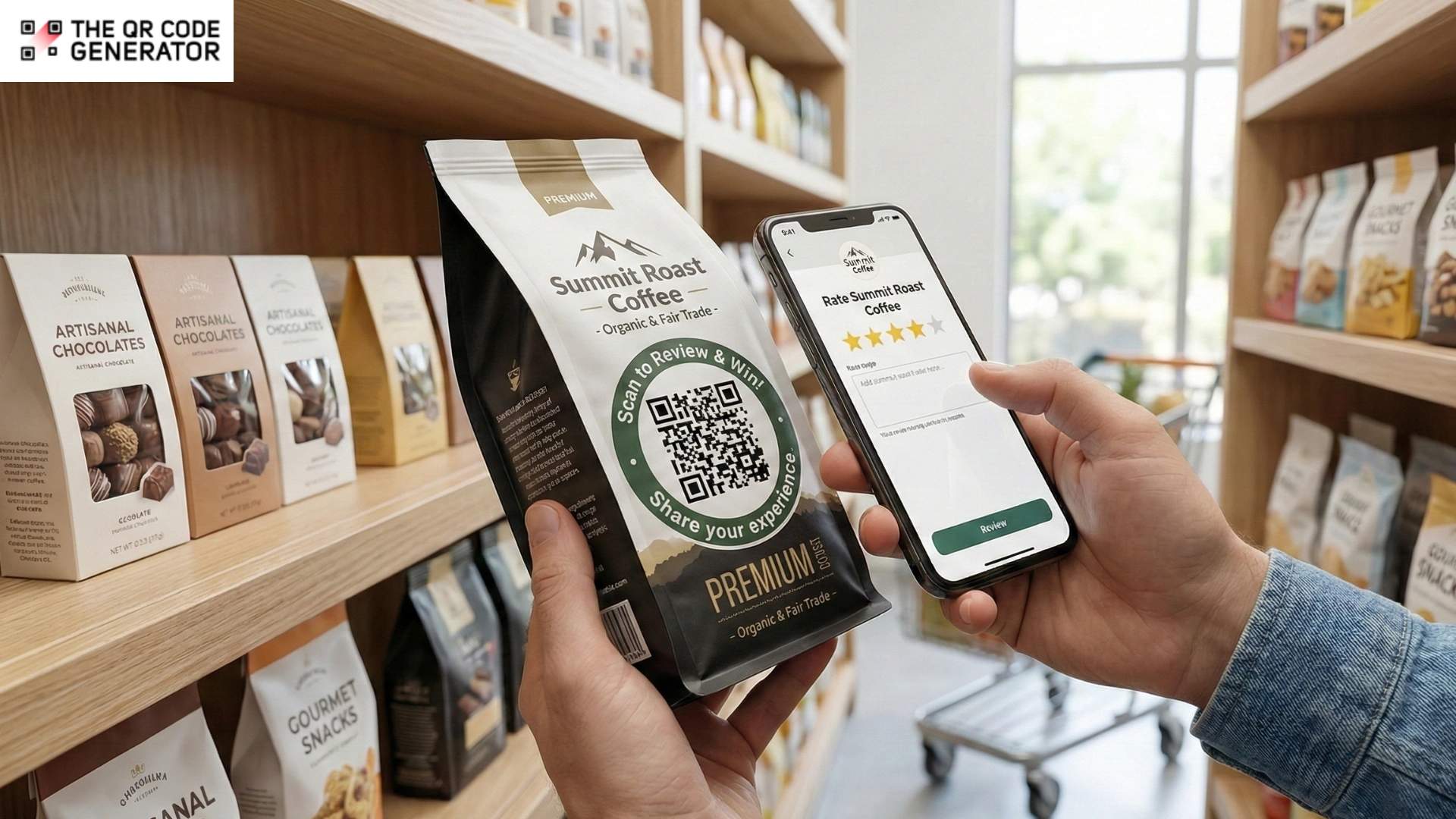
With 98% of consumers reading online reviews before making a purchase, they are more important than ever for consumer-packaged goods (CPG) brands.
However, collecting feedback for customers who buy in physical stores is notoriously challenging. When it comes to digital purchases, buyers are more likely to rate their experience or reply to a follow-up email. But the touchpoints for retail sales end at the checkout counter, making review collection impossible.
Traditional post-purchase email campaigns in retail suffer from declining open rates and feel disconnected from the actual product experience. And you can only send these campaigns if you have the buyer’s email, which is not usually the case.
QR Codes for CPG brands solve this by creating a direct and frictionless pathway to feedback at the exact moment of satisfaction.
In this guide, we’ll explore how CPG brands can use QR Codes to capture authentic reviews and build social proof to encourage more purchases.
Why do CPG brands struggle to collect reviews?
Without QR Codes at critical touchpoints, you lose review opportunities and struggle with low response rates.
1. Limited touchpoints for review collection
CPG products sold in retail stores don’t have built-in review prompts like Amazon or DTC websites. When a customer finishes a product, there is no immediate reminder to share feedback.
Brands that rely solely on packaging text often find that customers won’t take the extra step of searching for the brand online to leave a rating. This leaves retail-heavy brands looking less credible than their digitally native competitors, which have thousands of “Verified Purchase” reviews.
2. Delayed review requests
If you do manage to get your customer’s email, you have no way of knowing when to send the request for the review. It is difficult to ascertain when they used the product. Sometimes the optimal review timing is already gone when you send the request.
3. No way to verify an authentic product purchase
Online review platforms often struggle to confirm if a reviewer actually bought the product in a store. This lacks the “Verified Purchase” badge, which significantly enhances the review’s credibility. Without a physical-to-digital bridge, you lose a vital trust signal and are more susceptible to fake reviews.
QR Codes on packaging, receipts, and inserts solve these challenges by creating direct review pathways when customers are most engaged with your product. Let’s look at how leading CPG brands are capturing more authentic feedback.
How can CPG Brands use QR Codes to collect credible product reviews
Placing QR Codes strategically in the product can help you capture more authentic reviews. Here is where they are most effective:
1. QR Codes on product packaging
Add a QR Code right on the back panel, inside the lid, or package insert with a simple CTA such as “Love it? Scan to Share Your Review.” Link it straight to Google Reviews, Amazon, or your site with the product pre-selected, so customers can quickly submit their review. Place QR Codes where customers naturally look after opening, so they catch users’ attention.
2. QR Codes on receipts
Team up with retailers to add QR Codes to receipts to get credible reviews. Engage customers right at checkout when the purchase is top-of-mind and track which stores drive the most engagement. Encourage reviews with loyalty points or future discounts on the product.
3. QR Codes on packaging inserts
Tuck a small card with a QR Code inside the box. Share fun extras such as recipes or how-to tips first, so they feel helped before you ask for their thoughts. Motivate customers to leave a review after they’ve tried the recipes or used the product to prompt genuine reviews.
4. QR Codes linking to multi-platform review distribution
Use a multi-URL QR Code to lead customers to a page where they can choose their favorite review site to leave a review. Add social proof like “Join 1,247 happy reviewers on Google” to encourage customers to participate. Check scan analytics to understand what sites people pick most and modify your strategy accordingly.
5. QR Codes for incentivized review collection
Add a review QR Code that promises fun rewards, such as points, a discount code, or a chance to win something. You can also tier incentives by offering more points for detailed reviews, such as those with photos or longer feedback. This clear value exchange can help you increase review participation and collect richer insights.
Now that you know the ways you can use a QR Code for reviews for your CPG products, let’s understand how you can get started with creating QR Codes.
How to create QR Codes for product review collection
Collecting product reviews becomes far more effective when you have an optimized QR Code experience in place.
Step 1: Start with a clear campaign goal
Define what you want customers to achieve after scanning. Top goals for review QR Codes include:
- Boosting review volume
- Improving review quality
- Capturing verified purchase feedback
- Distributing reviews across platforms such as Google, Amazon, or Trustpilot
Before finalizing your QR Code experience, think about the customer’s context. Consider when they are most likely to scan the QR Code, such as right after purchase, after their first use, or once they’ve finished the product. Be clear about the action you want them to take. Also, because most customers will scan using their mobile phones while standing or sitting casually, keep the experience mobile-first and the forms short and easy to complete.
Step 2: Create a dynamic review QR Code
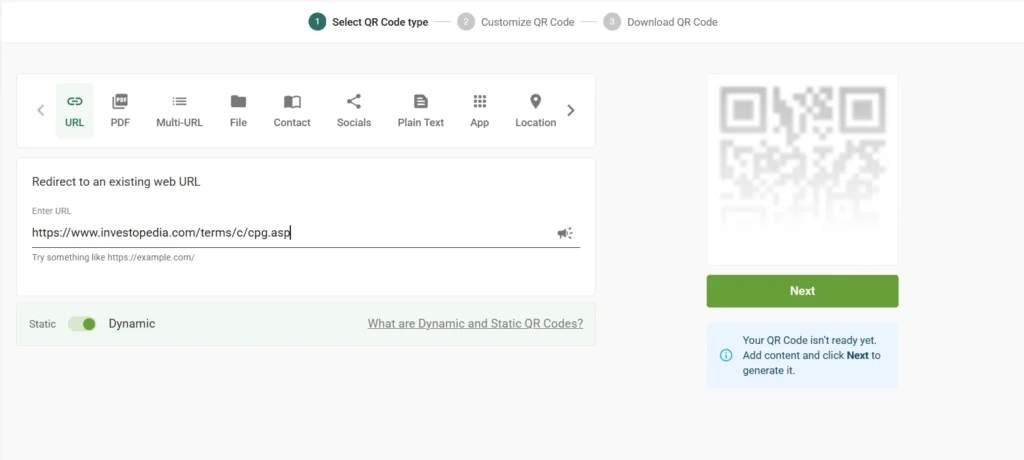
Build a mobile-optimized review landing page or direct review link with pre-selected product details. Enter the URL in The QR Code Generator (TQRCG) to generate a dynamic QR Code.
Dynamic QR Codes are essential for review campaigns because they allow you to update landing pages, A/B test CTAs, or redirect users to different review platforms such as Google, Amazon, or Trustpilot without reprinting the QR Code. This flexibility helps you optimize performance over time while keeping the physical QR Code consistent.
Step 3: Design the QR Code and customer experience
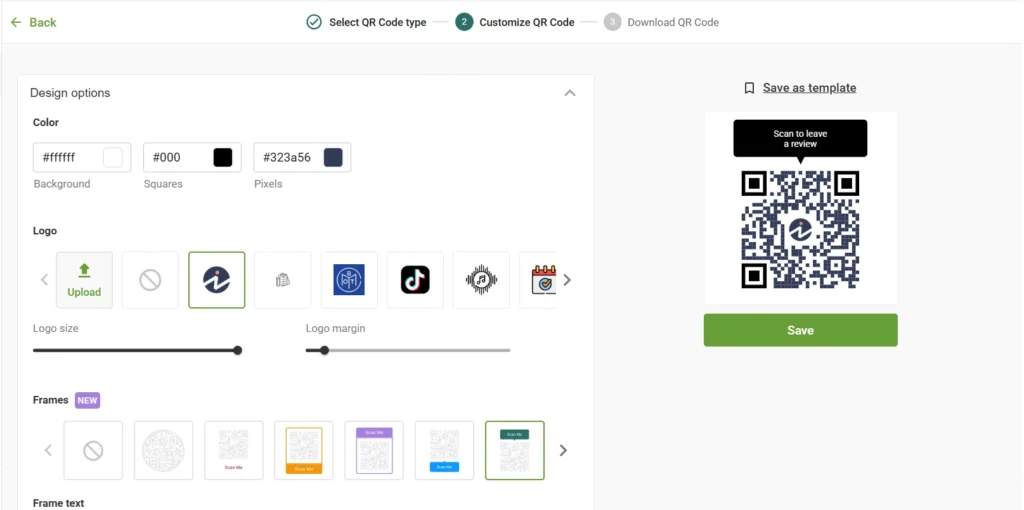
Customize the QR Code so it’s recognizable and clearly visible. Add a gratitude-driven CTA such as “Your opinion matters: scan to review” instead of a generic “Scan here” on the QR Code frame. This makes customers feel valued and increases participation.
Step 4: Test, track, and improve
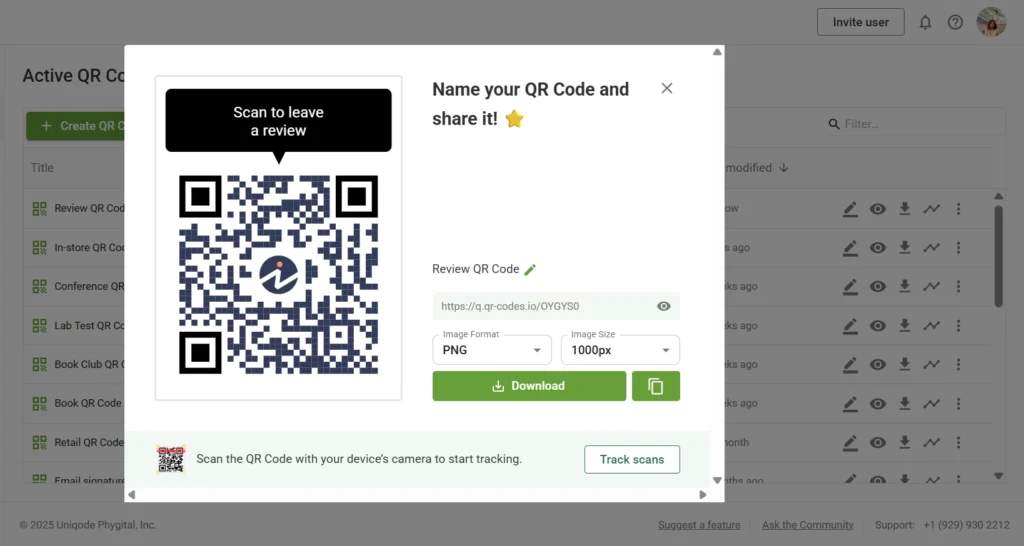
Before downloading, choose the correct QR Code format to get the best results. Test the QR Code from real-world distances, such as the package in someone’s hand vs. one sitting on a shelf. Track scan rates, review completion rates, and review quality. Use these insights to refine placement, messaging, and incentives over time.
Once your review QR Code is live, the next step is to apply best practices for placement, messaging, and follow-ups to consistently maximize reviews.
Best practices for using QR Codes to collect product reviews
1. Time your review requests based on product usage cycles
The window of opportunity for a review depends entirely on how the consumer interacts with your product. For fast-moving goods such as snacks or beverages, the QR Code should prompt a review immediately after purchase or opening.
Conversely, for durable goods or cleaning products, customers need time to see results before they can provide meaningful feedback. Tracking these timing patterns lets you optimize the ask to align with the moment of maximum customer satisfaction.
2. Make review submissions mobile-friendly and under 2 minutes
Reviewers are often scanning from their phones while literally holding the product in their other hand. To prevent drop-offs, optimize the landing page for thumb navigation and prioritize speed.
Start with a simple star rating as the minimum requirement to lower the barrier to entry, making detailed text or photo uploads optional.
3. Offer clear value exchanges for review participation
Consumers are more likely to share their thoughts when the benefit is explicit. Avoid generic prompts and instead use benefit-driven CTAs on your packaging, such as “Scan to Review and Get 10% Off Your Next Purchase.”
Whether you use the QR Code to offer a loyalty program, discounts, or exclusive content, the incentive must be delivered immediately after submission to reinforce the positive behavior. You can A/B test the review QR Codes for different incentive types that can help you identify exactly what motivates your specific customer base.
4. Use dynamic QR Codes to optimize review collection
Static QR Codes are a liability on permanent packaging because they cannot be updated once printed. Dynamic QR Codes allow you to switch review platforms or update seasonal messaging without reprinting a single box. This flexibility also allows you to retire codes from discontinued products or redirect traffic if a specific campaign ends.
5. Follow FTC guidelines for incentivized reviews
Transparency is critical for maintaining brand integrity and legal compliance. When offering incentives, you must clearly disclose this on both the packaging and the review form. Always request honest feedback rather than requiring a positive rating to receive the reward. Including a simple disclaimer ensures you stay compliant with FTC Guidelines for incentivized reviews.
6. Close the feedback loop by responding to reviews
A QR Code review campaign shouldn’t be a one-way street. Monitor feedback from your QR Codes and respond promptly to both praise and criticism. This shows your potential customers that your brand actively listens and values consumer input.
Furthermore, insights from these reviews can be used to improve product formulations or to highlight customer wins in your broader marketing materials.
Turn every retail touchpoint into a trust-building review tool
96% of customers are open to writing you a review. However, for CPG brands, the gap between a retail shelf and an online review has long been a barrier to building social proof. QR Codes bridge this divide, transforming every touchpoint into a powerful engine for capturing verified feedback at the exact moment of customer satisfaction.
By implementing strategic, mobile-optimized submission forms and transparent incentives, you move beyond the limitations of offline retail. With QR Codes, you can start building a library of authentic user-generated content that drives future sales.
If you are ready to start building social proof through your product experience, start with The QR Code Generator’s free plan. With two dynamic QR Codes that never expire, you can test review prompts and incentive structures on a small scale before rolling them out across your entire retail distribution.
Frequently Asked Questions
Where should CPG brands place QR Codes on packaging to collect more reviews?
QR Codes should be placed where customers naturally interact with the product, such as inside lids, on packaging inserts, or near usage instructions on outer packaging. Always test visibility and scannability before final production.
Should CPG brands offer incentives for QR Code-based product reviews?
Yes, incentives can increase review submissions when used ethically. Brands should reward honest feedback, not positive reviews, to stay compliant with FTC guidelines. Common incentives include discount codes, loyalty points, or contest entries, and these should always be clearly disclosed.
How do QR Codes help verify authentic product reviews?
QR Codes create a direct link between a product purchase and the review submission. They can enable verified buyer reviews by confirming ownership through packaging or receipts, reducing fake reviews, and increasing trust and credibility.
What is the ideal length for a QR Code review form?
The best review forms take less than two minutes to complete. A required star rating with an optional short comment works best, while additional fields should be added only if they don’t increase drop-offs.
Should CPG brands use static or dynamic QR Codes for reviews?
Dynamic QR Codes are the better choice because they allow brands to update links without reprinting packaging, test different review pages, and track scan and conversion performance.
Can one QR Code link to multiple review platforms?
Yes, with a multi-URL QR Code, you can direct users to a landing page where they choose their preferred review platform, such as Google, Amazon, or the brand website. This reduces friction and helps brands collect reviews across multiple channels.