
How CPG Brands Use QR Codes to Drive In-Store Conversions

Kritika
Last updated: January 22, 2026
10 min read
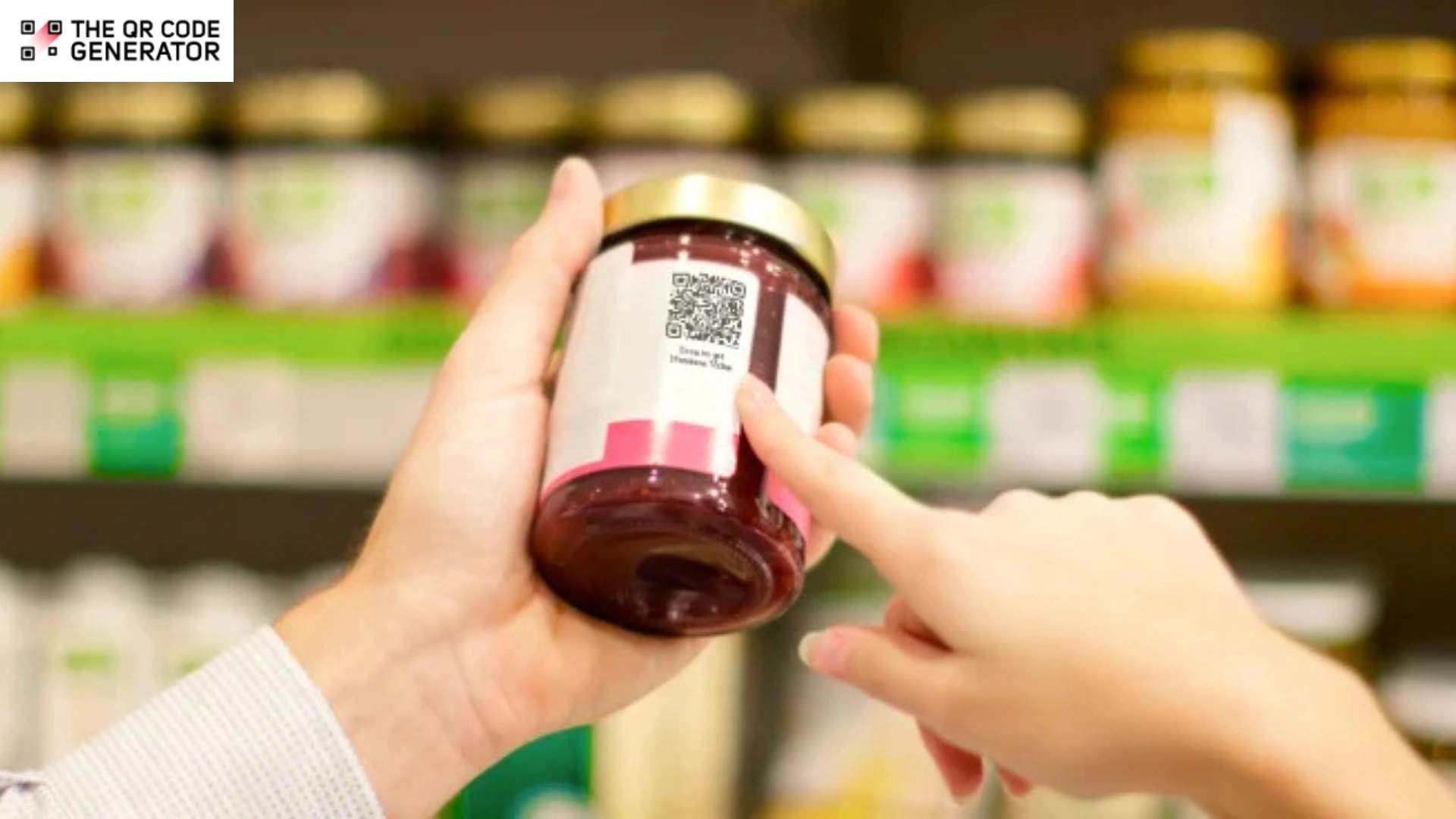
In-store advertising just accounts for 0.7% of retail media advertising. One of the reasons for this is the inability to track ROI and missing time-sensitive costs. But as Christine Foster, SVP at Kroger, puts it, “Physical stores are one of the most under-utilized platforms for brand storytelling”. From shelf talkers and packaging to aisle signage and digital displays, the in-store marketing offers endless opportunities to influence shoppers. Moreover, QR Codes for CPG solve the challenge of tracking ROI and updating data to capture attention at the right time and place.
In this article, we’ll show how CPG brands can use QR Codes to influence in-store purchase decisions, guide shoppers to the right information, and improve shelf conversions.
The in-store conversion leaks CPG brands miss without QR Codes
Without QR Codes at the point of decision, CPG brands lose a chunk of in-store revenue and a high-intent decision moment for the shopper. Here’s what that costs them:
1. No way to capture shopper data
CPG brands face stiff competition in the limited shelf space in a store. When a customer picks up your product, their purchase intent is at its highest. They end up either buying it or returning it. But you don’t get an insight into what compelled them to make the purchase.
65% of consumers say product transparency is important, yet the physical constraints of packaging limit CPG brands. QR Codes help you share extra information to your consumers that can be the decision maker for their purchase.
2. Expensive to update promotional messaging
Many in-store marketing tactics, such as shelf talkers, endcap displays, and packaging, are static once printed. Promoting limited-time offers or launching flash sales takes time and new materials.Additionally, you are unable to respond to a competitor’s promotion in real time. You can’t test different offers or messaging variations without significant expense.
3. In-store exposure doesn’t connect to online purchase paths
More customers are shopping online than offline, but many still value in-store visits. They go through multiple channels before choosing one to make a purchase. However, you have no way to measure how in-store displays drove conversions. The in-store marketing spend becomes hard to measure because you can’t attribute the results across channels. QR Codes solve this gap by turning every package, shelf talker, and display into a trackable touchpoint.
Leading CPG brands are implementing QR Codes for their in-store marketing in various ways. Let’s take a look at them:
How QR Codes improve in-store conversion for CPG Brands
Strategic QR Code placement transforms static retail presence into measurable customer acquisition channels. Here’s where they work most effectively.
1. QR Codes on product packaging
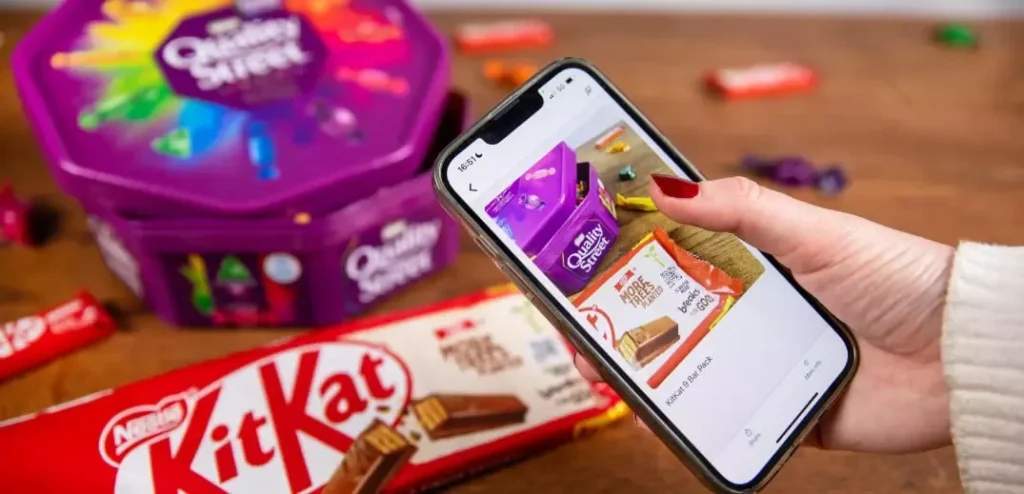
Brands can add a QR Code on product packaging and link it to subscription portals, nutrition information, accessibility details, or authenticity verification. When customers scan, they gain access to information or functionality that wouldn’t fit on the physical label.
Nestlé KitKat uses QR Codes on packaging to make product information and detailed nutrition data more accessible. This way, consumers are informed about their dietary needs or allergen concerns with accessible QR Codes. By reducing uncertainty at the shelf, shoppers can make a purchase with confidence instead of walking away.
2. QR Codes on shelf materials
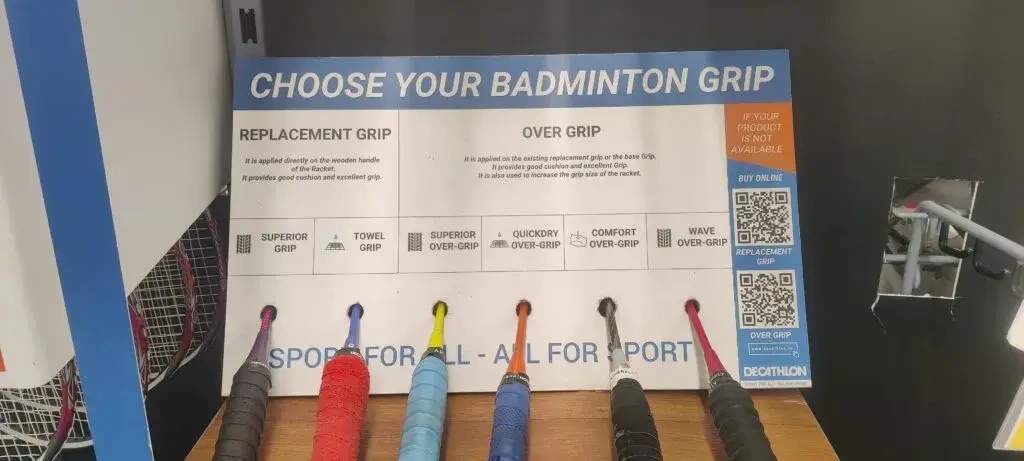
Place QR Codes on shelf talkers, price tags, or product signage to provide additional product information, enable direct online shopping, or help shoppers navigate product variants.
Decathlon uses QR Codes on shelf signage to provide extra product information and link to online shopping options. It allows customers to purchase online for home delivery if they can’t find the correct size, color, or variant in-store and eliminates lost sales when specific SKUs are out of stock. Brands can also add relevant UTM parameters to the QR Code URL to attribute sales made in-store, but on online channels.
3. QR Codes on promotional displays and endcaps
Incorporate large QR Codes on promotional posters, endcap displays, or standees to give shoppers instant access to product availability and special in-store discounts. Fun interactive quizzes in QR Codes can also help retailers increase engagement and give customers a smarter, faster way to shop.
Albertsons uses QR Codes on in-store signage to offer digital discounts to loyalty program members, encouraging immediate purchase at the shelf. For shoppers not enrolled in the program, the retailer supplements with store-redeemable paper coupons, ensuring promotions reach a wider audience. This approach drives in-person conversions, increases basket size, and rewards both digital and traditional shoppers.
4. QR Codes at sampling stations
Place QR Codes at sampling tables, demo stations, or tasting areas to capture contact information from interested shoppers and direct them to purchase or loyalty options. First-party shopper data also enables you to retarget potential customers through ads.
Walmart has expanded its sampling stations with QR Codes that lead to multiple engagement options, including online shopping, recipe collections, loyalty program enrollment, and exclusive offers. This transforms a sampling interaction into a multi-channel engagement and purchase opportunity.
5. QR Codes on receipts and packaging inserts
Include QR Codes on receipts or inside packaging to drive post-purchase engagement, loyalty enrollment, product feedback, or authenticity verification.
Luxury brands like Coach add QR Codes to their packaging inserts, allowing customers to verify product authenticity after purchase. It reduces counterfeiting, builds trust, and creates a direct communication channel for premium customers.
There are many ways you can engage and build trust with your customers with QR Codes. Along with the placement, it’s also important to understand how you can create the perfect QR Code for your use case.
How can CPG brands create QR Codes for in-store sales
Here’s a quick step-by-step guide to design highly effective QR Code campaigns for CPG brands:
Step 1: Start with a clear campaign goal
Before creating a QR Code, define exactly what you want shoppers to do after they scan. Different goals require different QR Code experiences. Common in-store goals include:
- Driving subscriptions or loyalty program sign-ups
- Capturing first-party shopper data
- Increasing basket size with coupons or bundles
- Educating shoppers to influence purchase decisions
Once your goal is clear, align three things:
- Where do you want to place the QR Code, on packaging, shelf talkers, endcaps, displays, or receipts?
- What do you want the QR Code to link to: a landing page, a discount code, a quiz, a product comparison, or a subscription portal?
- Finally, a CTA that clearly reflects the value to the shopper
Step 2: Choose the right QR Code type
Select a QR Code type based on the experience you want to deliver after scanning. Use a URL QR Code to direct shoppers to a product page, recipe, or comparison guide. You can use a review QR Code to collect post-purchase insights.For CPG campaigns, it’s strongly recommended to use dynamic QR Codes. These allow you to change offers, fix links, test messaging, or end promotions without reprinting packaging or in-store materials. They are also trackable, making them essential for measuring ROI.
Step 3: Generate your QR Code
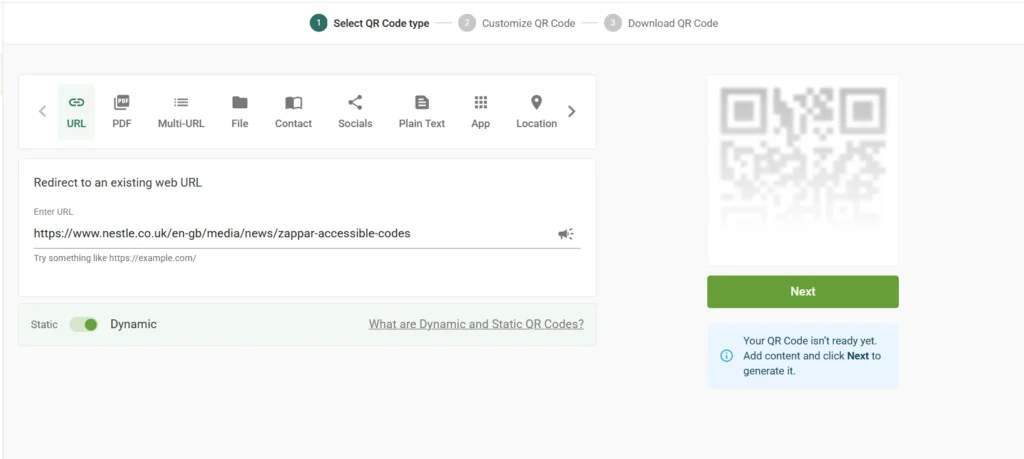
Once you’ve finalized the goal and destination, sign in to The QR Code Generator (TQRCG) and select the appropriate QR Code type. Enter the destination URL or campaign page, and generate a dynamic QR Code so you can update the content later without reprinting.
With TQRCG, you can manage multiple QR Codes for the same campaign, making it easy to test different placements, such as packaging versus shelf talkers. By assigning unique UTM parameters to each QR Code, you can clearly identify which placement drives more scans, engagement, and conversions without changing the core campaign experience.
Step 4: Design the QR Code and shopper experience
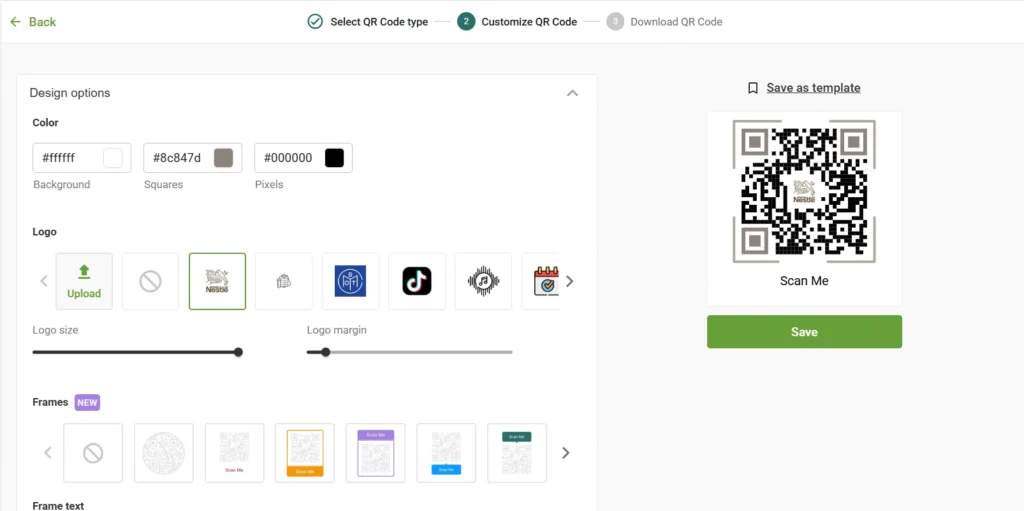
Next, customize the QR Code to match your brand while maintaining scannability. Add brand colors or a logo if needed, but always preserve high contrast between the QR Code pattern and background. Pair the QR Code with a clear and benefit-driven CTA to promote scanning.
Step 5: Download and prepare for print
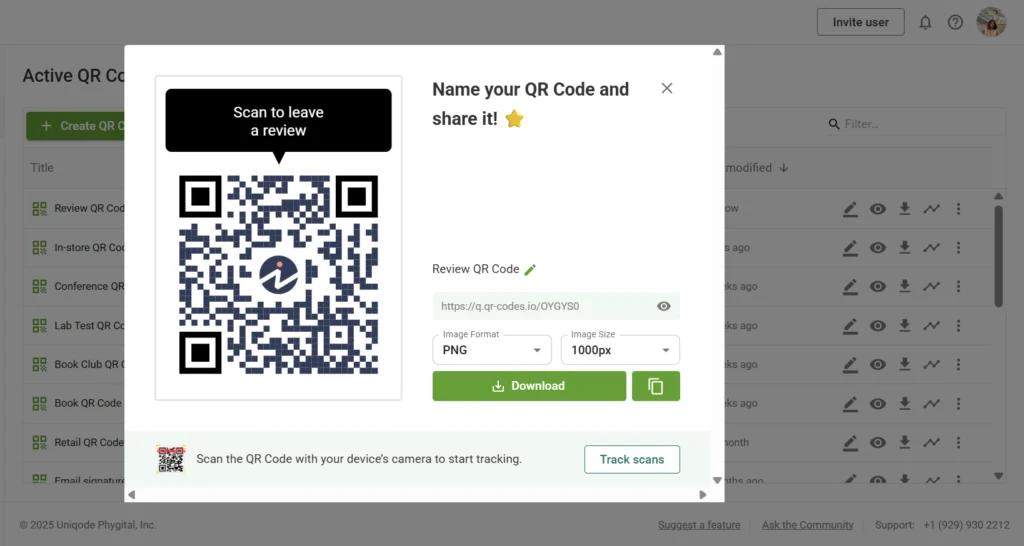
Name your QR Code and download it in a QR Code format suited to your placement. These are the formats that work the best for CPG businesses:1. SVG for shelf talkers, posters, endcaps, and digital displays.2. High-resolution PNG for packaging and smaller surfaces.Before final production, test the QR Code across multiple devices and operating systems to ensure reliable scanning.
To make your QR Code work hard for you, follow these tips to ensure it performs well in-store.
How to use QR Codes effectively for CPG in-store marketing
Run your QR Code by this checklist before taking your campaigns live. These minor tweaks will make all the difference when it comes to the success of your in-store QR Codes.
1. Make QR Codes scannable from a shopping distance
QR Codes must be scannable from the distance at which shoppers naturally stand. Here are the recommended QR Code sizes for different placements:
- Shelf talkers: Scannable from 2–3 feet; minimum size 1.5 × 1.5 inches.
- Endcap posters and aisle signage: Visible from across the aisle; recommended size 3 × 3 inches or larger.
- Packaging: Scanned at close range; QR Codes can be smaller, around 1 × 1 inch, but must maintain strong contrast and clean printing.
Always test scannability in actual store lighting conditions before final production.
2. Use benefit-driven CTAs
Shoppers will not scan a QR Code unless the benefit is immediately apparent. Avoid vague CTAs such as “Scan Here” or “Learn More.” Instead, clearly state what the shopper will gain, such as a discount, exclusive content, or helpful product information. When relevant, introducing urgency with phrases such as “Limited Time” or “Today Only” can further increase engagement.
3. Optimize landing pages for in-store scanning
In-store QR Code scans happen when shoppers are standing, moving, or waiting at checkout. Landing pages should load in under three seconds on mobile networks and focus on a single primary action. Ensure the value proposition is visible above the fold, and that the page is mobile-friendly. Long paragraphs, complex navigation, or multiple competing CTAs significantly reduce conversions in retail environments.
4. Use dynamic QR Codes
Static QR Codes lock you into a single destination and cannot be changed once printed, making them risky for CPG campaigns. Dynamic QR Codes allow you to update offers, fix errors, test different messaging, or redirect traffic when promotions end, all without reprinting packaging or in-store materials. This flexibility is essential for seasonal campaigns, inventory-driven promotions, and ongoing optimization.
5. Track performance
To understand what actually works in-store, use different QR Codes or UTM tracking parameters for each placement, store type, or region. This allows you to identify which locations drive the highest scan rates and conversions, rather than relying on assumptions. Exporting QR Code analytics and connecting them to your CRM helps link in-store engagement to customer profiles, enabling better segmentation, retargeting, and attribution.
6. Avoid placements that disrupt natural shopping flow
Even well-designed QR Codes will underperform if they are placed where shoppers cannot comfortably scan them. Avoid positioning QR Codes on bottom shelves, behind products, or on visually cluttered packaging. Observing real shopper behavior and testing placements before a full rollout can prevent costly mistakes and improve overall campaign effectiveness.
Turn every shelf into a conversion opportunity with QR Codes
For years, CPG brands have invested in in-store marketing without a reliable way to measure what actually works. QR Codes change that. When implemented strategically, QR Codes turn every in-store touchpoint into a measurable interaction.
They allow you to capture first-party shopper data at the moment of intent, connect offline exposure to online conversions, and continuously optimize campaigns based on real performance.
If you’re ready to move beyond static advertising and start proving in-store ROI, QR Codes are one of the fastest and lowest-friction ways to get there.
Start with The QR Code Generator’s free plan to test dynamic QR Codes on your retail advertisements. With two dynamic QR Codes that never expire, you can validate placements, offers, and performance before scaling across retail locations.
Frequently Asked Questions
Q: Where should CPG brands place QR Codes for maximum in-store conversion?
CPG brands should place QR Codes at high-intent touchpoints across the store. The most effective locations include product packaging, shelf talkers, endcap displays, and digital displays.
Q: Should CPG brands use static or dynamic QR Codes for in-store marketing?
CPG brands should use dynamic QR Codes. They allow brands to update campaigns, change landing pages, redirect sold-out products, and fix broken links without reprinting packaging or in-store materials.
Q: How do QR Codes help CPG brands compete with private label products?
QR Codes help CPG brands compete beyond price. They create space for brand storytelling, certifications, reviews, and social proof, while also enabling subscriptions and loyalty programs that private labels typically can’t match.
Q: What types of offers work best on QR Codes for CPG products?
Offers that drive repeat value perform best. This includes subscription discounts, limited-time promotions, exclusive recipes or usage tips, product bundles, and loyalty program enrollment.
Q: Can QR Codes on CPG products track which retail location drove the scan?
Yes, QR Codes can track store-level performance. Brands can use unique QR Codes by store or region, or UTM links, to measure scans and conversions by retailer and location.
Q: How do CPG brands measure ROI from QR Code campaigns in stores?
ROI is measured by tracking scans, visits, sign-ups, and conversions. Brands can attribute purchases using tracked links or discount codes and compare sales lift in QR Code-enabled stores versus control stores.