
How Medical Bracelets With QR Codes Improve Patient Safety

Shreesh
Last updated: March 3, 2026
9 min read
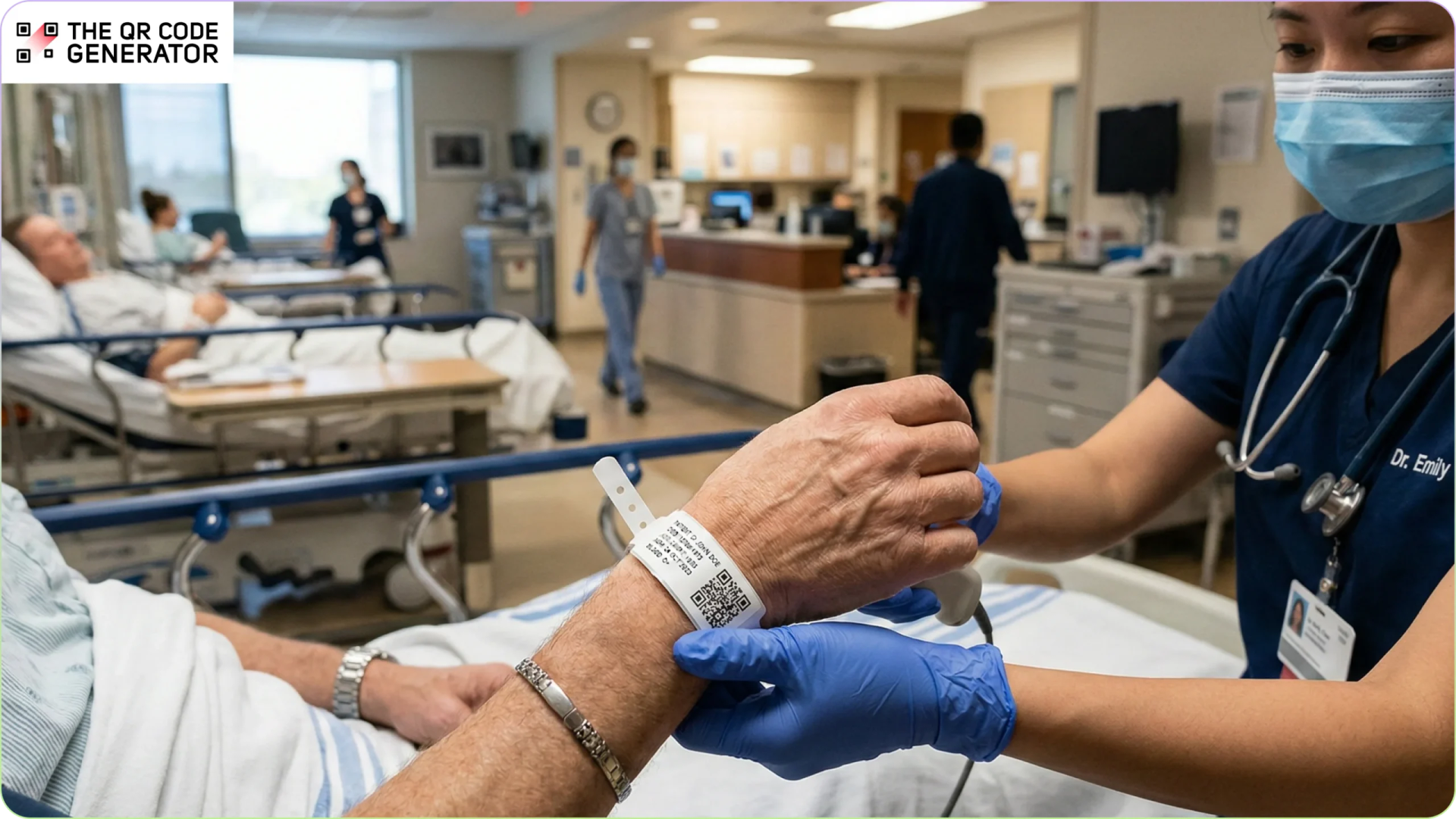
Medical ID bracelets were designed for emergencies. But most only hold a few words.
That limitation matters. According to the World Health Organization, 1 in 10 patients is harmed while receiving health care, and unsafe care causes more than three million deaths globally each year. Much of this harm is preventable and can be linked to missing or incomplete information.
In high-pressure situations, clinicians rely on fast access to accurate medical history. When key details such as allergies, medications, or chronic conditions are unavailable, treatment decisions may be delayed or based on assumptions.
For patients with complex health needs, an engraved bracelet often leaves out critical information.
A medical bracelet with a QR Code closes this gap. It connects a wearable ID to a secure digital medical profile that can be updated anytime and accessed instantly with a mobile phone scan.
Before looking at the solution, it’s important to understand exactly wh
Why traditional medical alert bracelets fail in real emergencies
When every second counts, incomplete information can delay proper care. Standard engraved bracelets simply don’t have the capacity to store detailed medical histories or multiple emergency contacts.
Limited space restricts lifesaving medical information
An engraved bracelet can accommodate only a limited number of characters. Patients are forced to choose which condition to include and which to leave out. Complex medical histories cannot be meaningfully captured in a single engraved line.
When essential details such as secondary conditions, dosage information, or drug allergies are missing, emergency care decisions may rely on assumptions instead of complete information. In high-pressure situations, assumptions increase risk.
Outdated medical details increase treatment risks
Medical information changes over time. Medications are adjusted. New diagnoses are added. Allergies are discovered. But engraved medical bracelets cannot be updated instantly.
This creates a gap between a patient’s current health status and what responders see on the bracelet. In emergency settings, outdated information can lead to incorrect or delayed treatment decisions.
Slower patient identification during critical response
In emergencies involving unconscious or nonverbal patients, identification becomes even more critical. If a bracelet provides only minimal information, first responders must spend additional time gathering context from family members, medical records, or prior documentation.
Even short delays can affect outcomes during cardiac events, severe allergic reactions, trauma, or other time-sensitive situations.
Traditional medical alert bracelets were an important first step in emergency identification. But in today’s healthcare environment, static engravings alone are no longer enough. As patient histories become more complex, identification tools must evolve to keep pace.
How medical bracelets with QR Codes improve emergency response
When every second counts, access to accurate medical information can change outcomes. By linking a wearable medical ID to a digital medical profile, QR Code medical bracelets fundamentally improve emergency identification.
Here’s how that makes a measurable difference.
Instant access to a complete medical profile
A medical bracelet with QR Code links to a secure digital record with allergies, chronic conditions, medications, and emergency contacts.
Incomplete information is common in emergencies. When providers lack accurate medical history, treatment decisions may be delayed or based on assumptions.
Real stories show why this matters. On the Medic Alert Foundation, a medical ID user describes how the ID helped save their life after a serious car crash. When emergency responders arrived and found the medical ID, they used it to understand the person’s medical history right away. That immediate access helped guide safer treatment before the patient could speak for themselves.
A QR Code medical bracelet builds on this idea. Instead of limited engraving, responders can scan the bracelet and instantly view detailed, up-to-date medical information. That speed supports faster and safer decisions.
Safer treatment decisions in high-pressure moments
Medication errors are a major safety issue. The Centers for Disease Control and Prevention reports that adverse drug events lead to more than 1.5 million emergency department visits annually.
In high-pressure situations, missing allergy or medication data increases risk. For example, if a patient with a severe penicillin allergy is unconscious after an accident, providers must make rapid decisions. Without clear documentation, there is a risk of administering a contraindicated drug.
QR Code medical bracelets surface critical alerts immediately after scanning. This helps reduce uncertainty and lowers the risk of preventable medication errors.
Real-time updates without replacing the bracelet
Medical information changes often. Medication lists are updated when new conditions are diagnosed, dosages change, or prescriptions are added.
Incomplete or out-of-date medication information is a known safety problem. Medication discrepancies occur in more than half of hospital admissions when patient records are incomplete or not reconciled.
Traditional engraved bracelets cannot reflect these changes unless they are replaced. That creates a gap between what is engraved and the patient’s current medical status.
With dynamic QR Codes, medical information can be updated anytime by the patient or caregiver. When scanned, providers see the most current profile rather than static text that can quickly become outdated.
Better accessibility for elderly and chronic-care patients
Chronic disease is common, especially among older adults. According to research published, 93% of adults age 65 and older have at least one condition, while 79% have two or more.
In addition, the Alzheimer’s Association reports that millions of Americans aged 65 and older are living with Alzheimer’s disease or other forms of dementia. Cognitive impairment can make it difficult to communicate a detailed medical history during emergencies. Also, in situations such as stroke, hypoglycemia, or cardiac events, a patient may not be able to speak clearly.
A medical alert bracelet with QR Code allows responders to access accurate medical information without relying on memory. Caregivers can manage and update the wearer’s digital profile, helping maintain accuracy and completeness over time.
Secure emergency access with controlled data sharing
Healthcare data must be protected. Healthcare data breaches have affected millions of individuals in recent years. At the same time, emergency responders need quick access to essential medical information.
QR Code medical bracelets can provide read-only emergency access. First responders can view critical details, but only authorized users can make updates. Systems designed for healthcare may include encryption and multi-factor authentication to support privacy and security.
QR Code medical bracelets represent a meaningful upgrade in emergency identification. Next, let’s look at how you can create one that works reliably when it is needed most.
How to create a medical bracelet with a QR Code
Follow this step-by-step guide to create a medical QR Code bracelet that is secure and HIPAA-compliant using The QR Code Generator (TQRCG).
Step 1: Choose what medical information to add
Start by identifying only the most essential emergency data. Include critical details such as allergies, current medications, medical conditions, blood type, and emergency contact information.
Avoid overloading the profile with non-essential history or excessive documentation that could slow down access or overwhelm first responders.
Step 2: Generate a dynamic medical QR Code
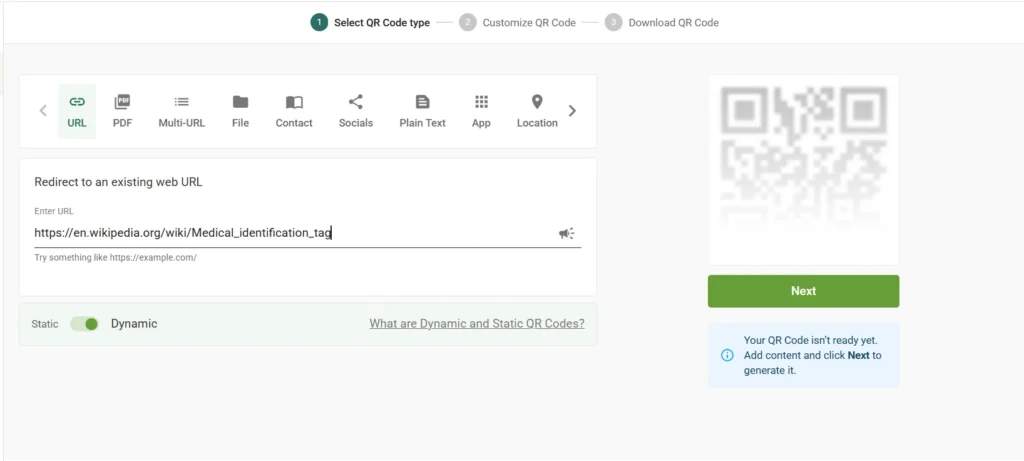
Log in to The QR Code Generator (TQRCG) to create your QR Code. Link to a secure landing page with all the information, or use the plain text QR Code or PDF QR Code to add necessary information.
Step 3: Design the QR Code for emergency scanning
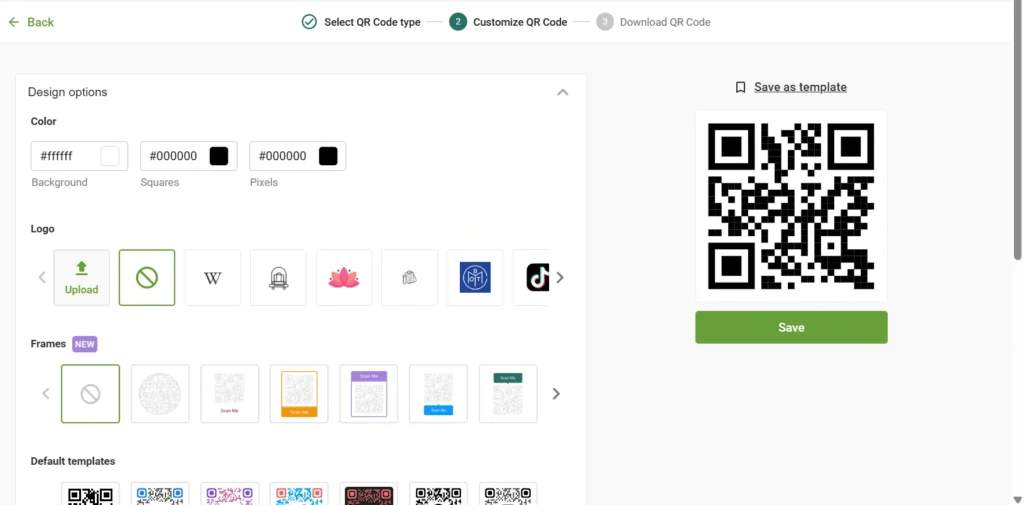
Maintain high contrast between the QR Code and its background to ensure fast recognition by smartphone cameras. Avoid decorative shapes, excessive branding overlays, or complex patterns that may interfere with scannability.
Step 4: Test emergency scanning reliability
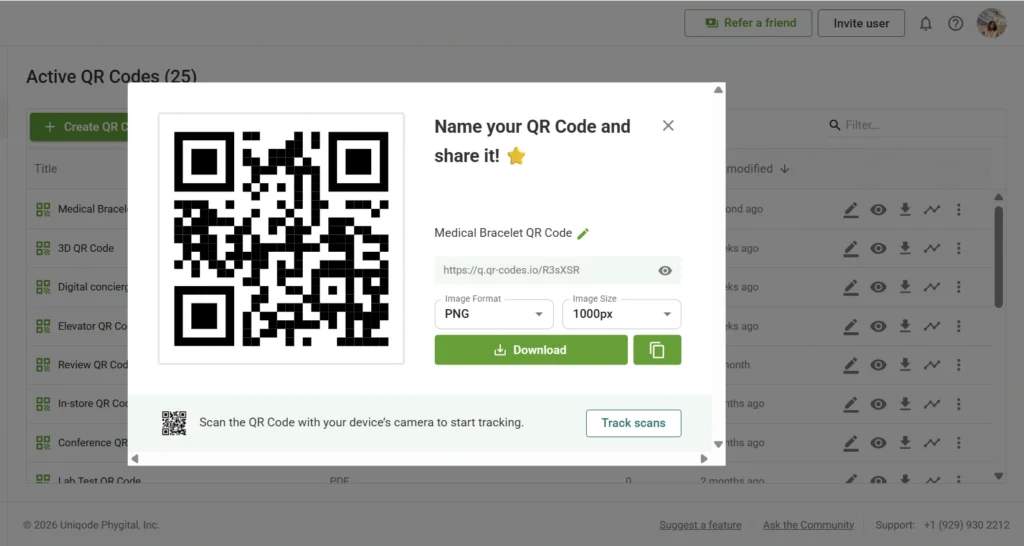
Download your QR Code. Before adding the QR Code to your medical bracelet, run through this quick validation to ensure it performs reliably in real emergencies:
- Test on multiple devices: Scan the QR Code using both iOS and Android smartphones to confirm cross-device compatibility.
- Check low-light performance: Test scanning in dim or uneven lighting conditions.
- Try different angles: Scan from slight tilts and off-center positions to simulate real-world use.
- Vary the distance: Test from close range and a few inches away to ensure consistent recognition.
- Confirm instant access: Make sure the medical profile loads without any extra steps.
Completing this checklist helps ensure your QR Code for the healthcare system works well when it matters most.
Step 5: Select a durable medical bracelet format
Choose a wearable medical ID that can withstand daily use. The bracelet should be waterproof, sweat-resistant, durable, and tamper-resistant while remaining comfortable enough for continuous wear. Laser-engraved or molded bracelet designs can make QR Codes durable compared to printed labels, which can fade or become damaged over time.
In addition to these, there are a few guidelines to keep in mind before using your medical bracelet.
How to get the most out of your QR Code medical bracelet
A QR Code medical bracelet is a lifesaver in emergencies. Here are a few expert tips that you can follow to maximize its reliability.
1. Use dynamic QR Codes for editable medical records
Static QR Codes can’t be updated. Opt for dynamic QR Codes for medical alerts instead. These let you edit profiles anytime via a secure dashboard, adding new medicines or conditions without reprinting the bracelet.
2. Enable high error correction for damaged or worn surfaces
You need to wear your medical bracelets daily, which can lead to some wear and tear. Choose QR Codes with high error correction levels (up to 30%) to remain scannable even if scratched or faded. This ensures your QR Code medical bracelet works reliably in real emergencies, no matter the condition.
3. Ensure no app is required
Time is critical during medical crises, so make sure your QR Code medical bracelet is not linked to any website that requires app logins. Use universal formats that open directly in the browser. This keeps information accessible to anyone and anywhere.
4. Choose durable and waterproof bracelet materials
Select waterproof QR Code bracelets made from silicone, stainless steel, or hypoallergenic rubber that withstands water, heat, and daily use. Engrave or laminate the QR Code for longevity, ensuring your best QR Code medical bracelet for emergencies lasts for years.
5. Regularly review and update medical information
Review your QR Code medical ID bracelet every 6 months or after health updates. Consistent upkeep makes it a trusted source of emergency information for families and first responders.
Create secure medical QR Code bracelets with TQRCG
Emergency identification should not rely on a few engraved words. As medical histories become more complex, access to accurate and up-to-date information becomes critical.
QR Code medical bracelets expand what a medical ID can do. They provide instant access to detailed health profiles, support safer treatment decisions, and allow updates without replacing the bracelet.
The QR Code Generator (TQRCG) offers secure, dynamic QR Codes built for healthcare use, with easy updates and protected hosting.
Signup and create your medical QR Code bracelet with TQRCG today!
Frequently Asked Questions
What information should be stored on a medical QR Code bracelet?
A medical QR Code bracelet should include essential, emergency-only information, such as full name, emergency contacts, allergies, current medications, chronic conditions (such as diabetes or epilepsy), blood type, and major implants.
Are QR Code medical bracelets secure and HIPAA-compliant?
Medical bracelets can be secure and HIPAA-compliant depending on how the data is stored. It also depends on the QR Code generator you use. TQRCG provides HIPAA-compliant QR Codes.
Do first responders actually scan medical QR Codes?
Yes, many first responders are trained to check for medical alert bracelets if you are unconscious or unable to respond. With widespread smartphone use, scanning QR Codes is now common. Clear labeling also improves visibility and response time.
What’s the difference between static and dynamic medical QR Codes?
Static QR Codes store fixed information and cannot be edited once created. Dynamic QR Codes link to an online medical profile that can be updated anytime, making them more practical for changing medications or conditions.
Can elderly patients easily use QR Code medical bracelets?
Yes. The wearer doesn’t need to do anything; the emergency personnel scan the QR Code. Caregivers can update the linked medical profile, making QR Code bracelets especially useful and accessible for seniors and patients with ongoing health conditions.