
Create QR Codes on Clothing to Build Brand Trust
Share product stories beyond label space, verify authenticity instantly, and track garment lifecycles from production to resale.
Redirect to an existing web URL
To enable tracking,


How do QR Codes on clothing work?
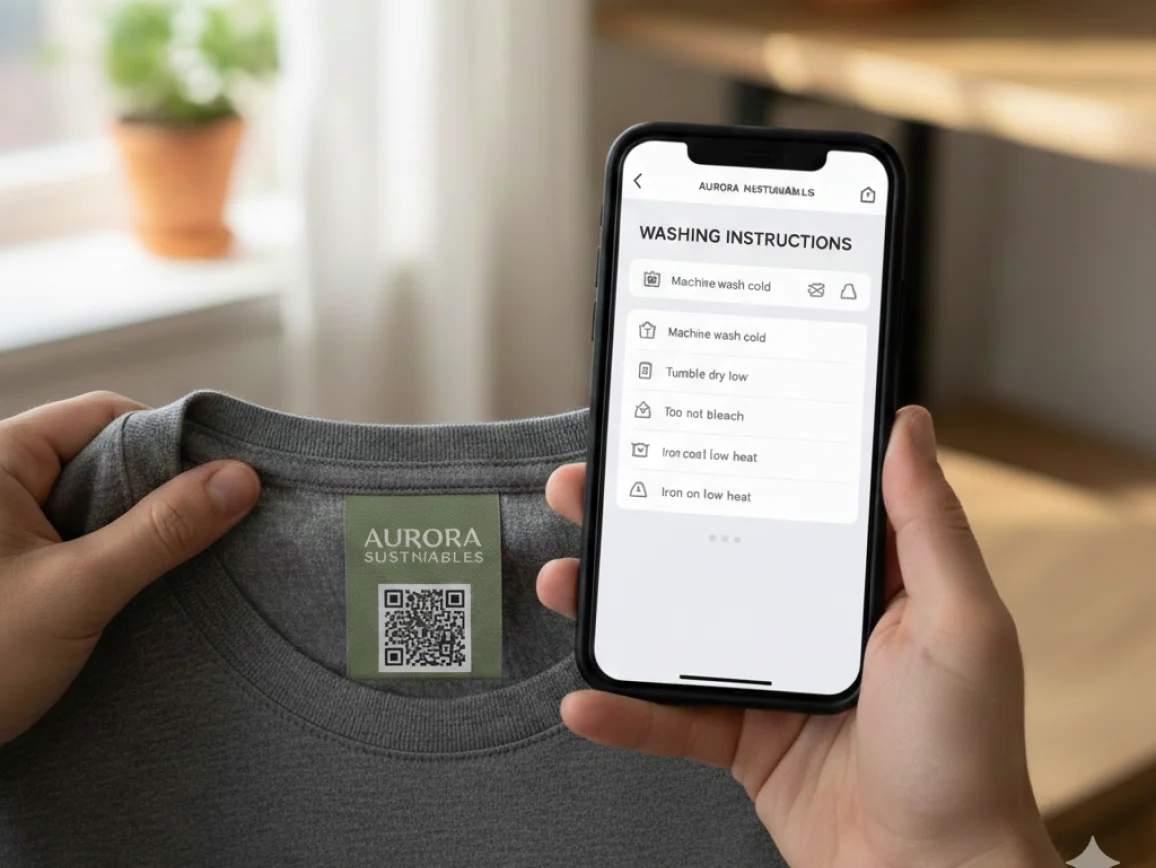
QR Codes on clothing labels link to digital product information such as care instructions, fabric details, sizing guides, brand stories, or sustainability credentials. Customers scan with their smartphone camera to access information that doesn't fit on physical tags. Dynamic QR Codes let you update content throughout a garment's lifecycle, adding resale information, recall notices, or seasonal styling tips without changing the physical label.
4M+
Unique users worldwide
30,000+
Global businesses on our platform
60+
Countries with active users
How QR Codes on clothing help strengthen brand credibility
How to ensure clothing QR Codes scan reliably

Choose wash-resistant printing
Use heat-transfer printing, woven labels, or laser etching for QR Codes that survive multiple wash cycles. Test after over 10 washes to ensure continued scannability.

Test on actual fabric
Print test QR Codes on your chosen fabric and label material. Scan under different lighting conditions and after washing before mass production.

Size for garment tags
Use minimum 1 × 1-inch QR Codes for hang tags and 0.8 × 0.8-inch QR Codes for woven care labels. Larger sizes improve scan reliability.

Use high contrast
Black QR Codes on white labels work most reliably. Avoid low-contrast combinations that reduce scannability.

Position on accessibility
Place QR Codes where customers can easily access them, such as hang tags for pre-purchase scanning or care labels for post-purchase information. Avoid seams or hidden locations.

Use dynamic QR Codes
Choose dynamic QR Codes so you can update resale information, recalls, or warranty details without changing physical labels.
Where to add QR Codes on clothing for maximum engagement
Hang tags and swing tags
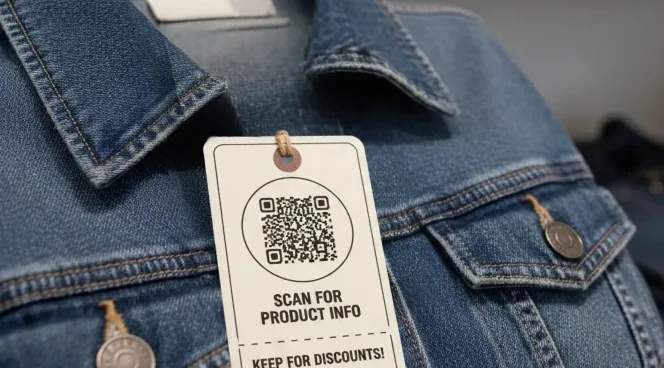
Attach QR Codes to removable hang tags for pre-purchase product information, sizing guides, and brand storytelling. Customers scan in-store to access details that help make purchase decisions before checkout.
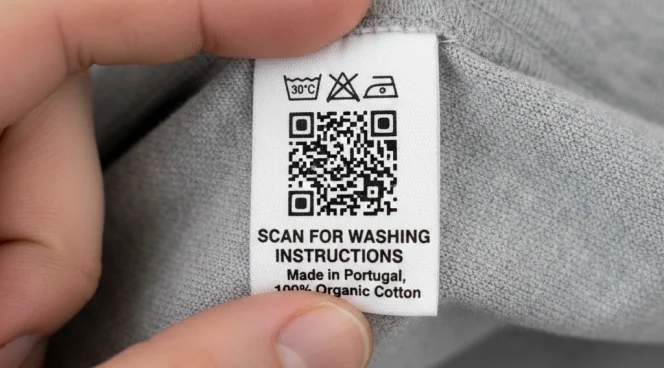
Care instruction labels
Print QR Codes on care labels inside garments for detailed washing instructions, stain removal guides, and fabric-specific care tips. Customers access this information when needed instead of deciphering tiny label symbols.
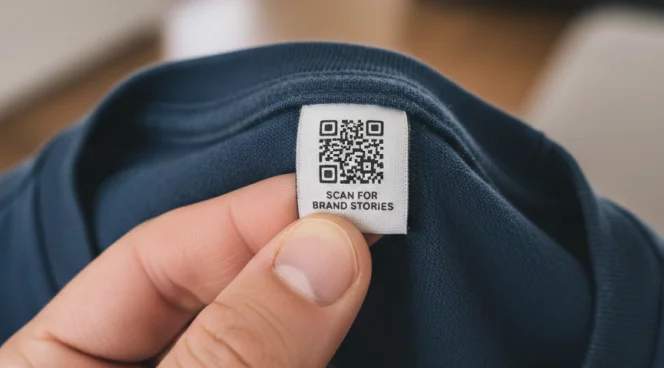
Neck labels and brand tags
Add QR Codes to neck labels for brand stories, product authentication, and warranty registration. These permanent labels remain with garments throughout their lifecycle, enabling long-term engagement.
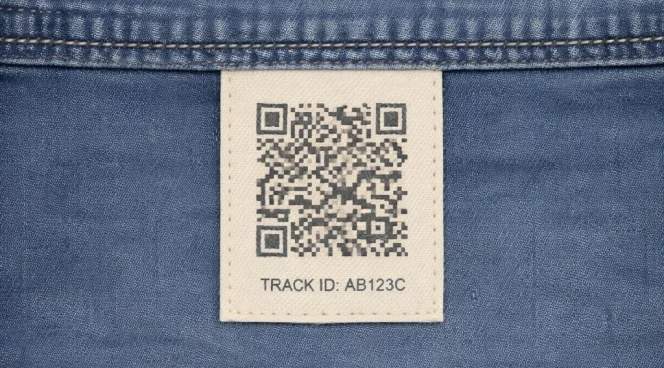
Woven labels on seams
Embed QR Codes in woven seam labels for discreet product tracking and resale verification. These durable labels survive multiple washes while maintaining scannability for secondhand authentication.
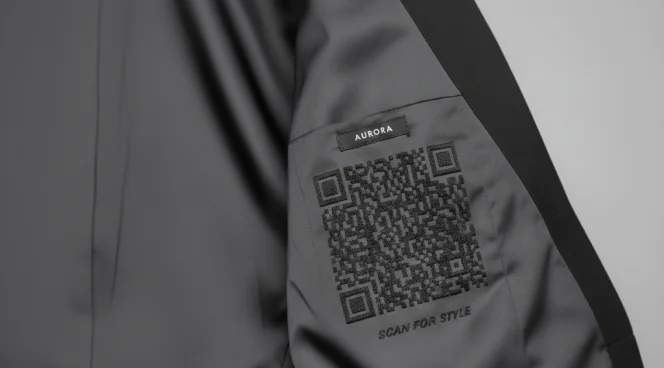
Direct fabric printing
Print QR Codes directly onto fabric interiors or design elements for fashion-forward brands. This works well for statement pieces where QR Codes become part of the design rather than hidden labels.
How do leading brands use QR Codes on clothing effectively?
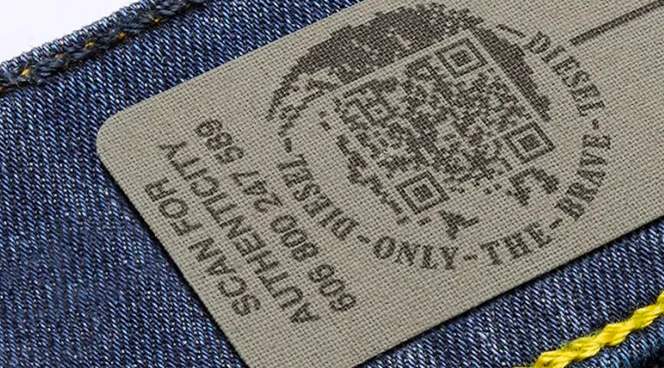
Diesel
Diesel embedded QR Code-enabled Digital IDs into garments to fight counterfeits and verify authenticity. Each scan connects customers to a secure digital product record that confirms product origin and ownership, strengthening trust in both primary and resale markets while protecting long-term brand value.
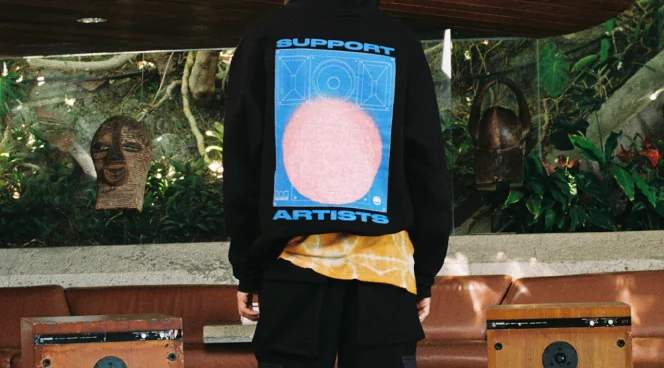
Bacardi
Bacardi added QR Codes to limited-edition music merchandise and wearable albums, allowing fans to unlock exclusive artist content and digital experiences. By linking physical apparel to music and community access, the brand turned merchandise into an ongoing engagement channel beyond the initial purchase.
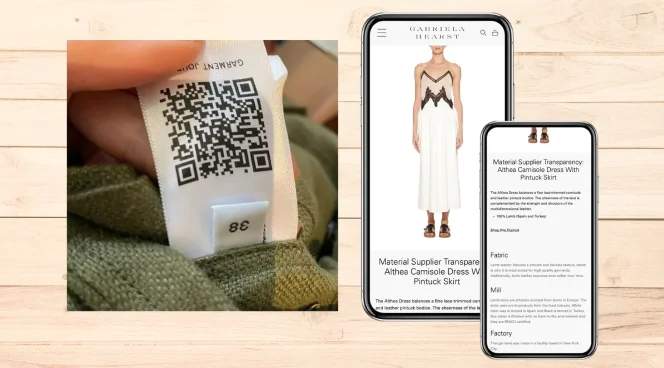
Gabriela Hearst
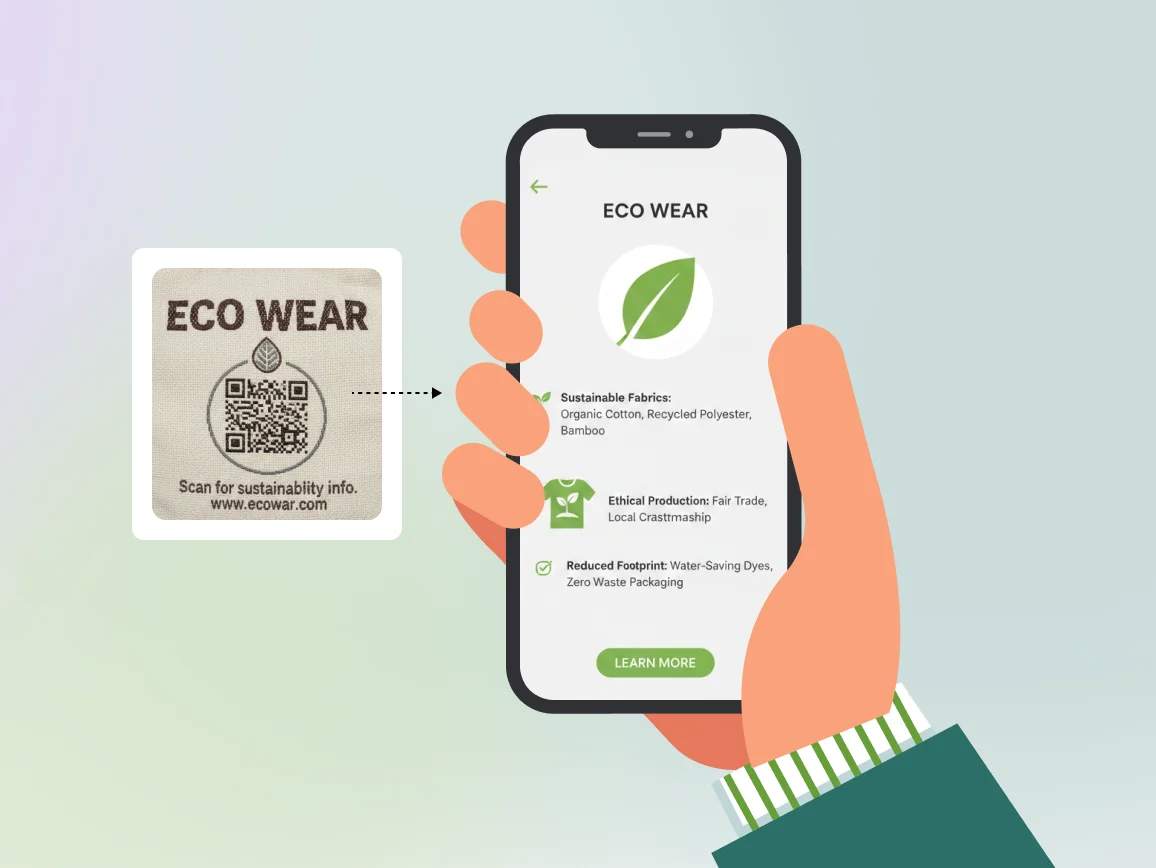
Gabriela Hearst uses QR Code-powered Digital IDs to share full lifecycle and sustainability data for each garment. Customers can access sourcing details, materials, and environmental impact information, turning sustainability claims into transparent, verifiable proof.
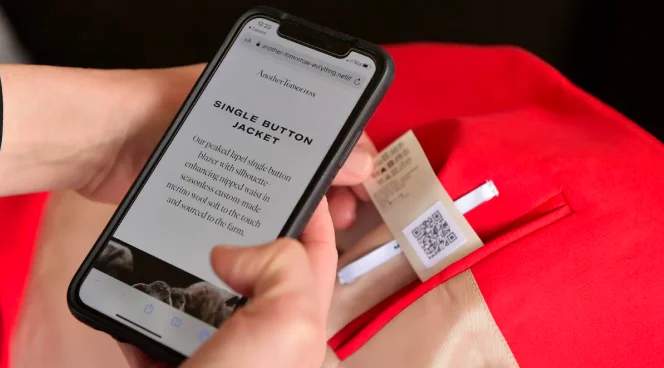
Another Tomorrow
Another Tomorrow integrates QR Codes into garments to share detailed information about sourcing, materials, and production practices. Scanning connects customers to verified supply chain data and impact metrics, helping the brand build credibility with sustainability-focused shoppers.
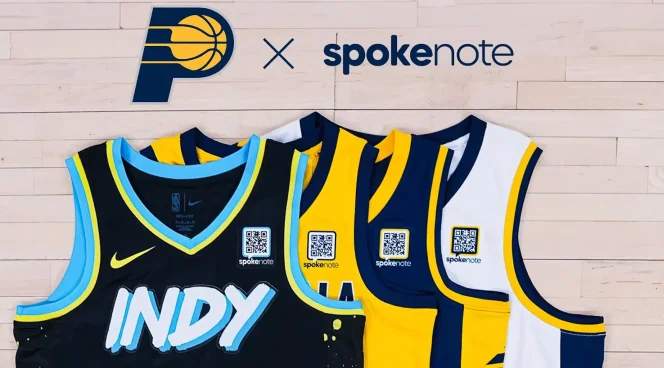
Indiana Pacers
The Indiana Pacers used QR Codes on fan apparel to connect supporters to digital content, local offers, and in-arena experiences. By integrating merchandise into their engagement strategy, the team transformed clothing into an interactive touchpoint for building long-term fan relationships.