
How to Use QR Codes for Promotion to Drive Sales

Harshajit
Last updated: April 6, 2026
13 min read
Most marketing spend disappears into a black box. You invest in campaigns, but it’s unclear what actually drives results.
Customer acquisition costs are rising, making that lack of visibility even more expensive.
Part of the problem is how customers move today. Customer journeys are no longer linear. Someone might see your flyer, visit your store later, and convert online, but there’s no clear way to connect those steps.
This creates offline attribution gaps. You’re driving attention, but without clear tracking, budgets get wasted. Print makes this worse. It creates visibility but rarely drives action because there is no immediate next step.
QR Codes fix this. A simple scan turns offline attention into measurable digital action.
How are QR Codes used for promotions?
Here is how QR Codes are typically used in promotions.
- Businesses create a QR Code using a QR Code generator and link it to a specific promotion, such as a discount page, a coupon, a signup form, or a product page.
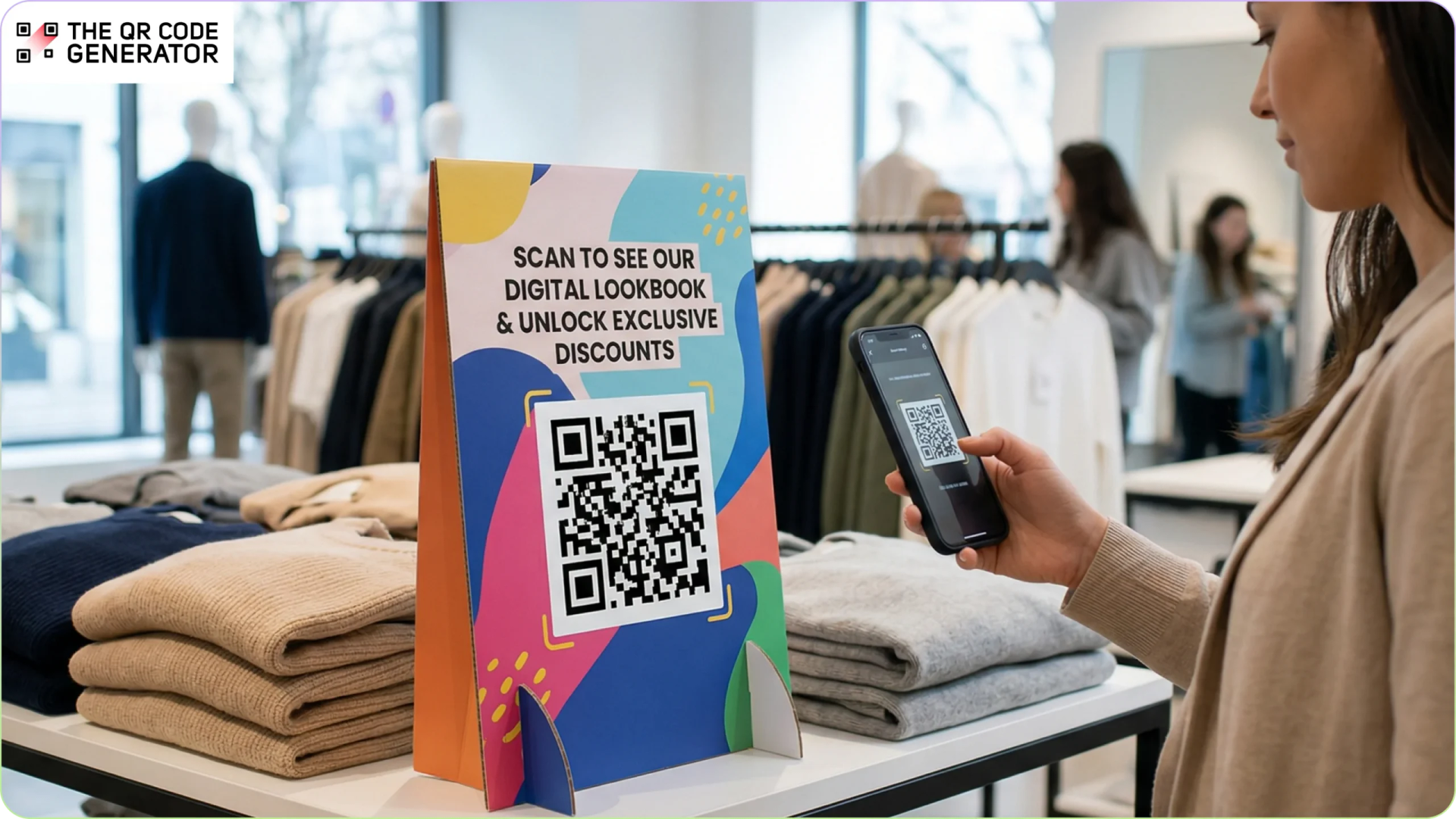
- The QR Code is then placed on marketing materials such as posters, packaging, print ads, event booths, or in-store displays, where people can spot and scan it.
- When someone scans the QR Code using their smartphone, they are taken directly to the promotion.
- The campaign can then be tracked and optimized using dynamic QR Code analytics.
Key benefits of using QR Codes for promotion
QR Codes are not just a way to share links. When used in promotions, they change how campaigns are tracked, experienced, and connected across channels.
Here are the key benefits that make them effective.
Turn offline traffic into measurable data
Most offline campaigns stop at visibility. You might know where you placed an ad, but not what happened after. QR Codes change that by making every interaction trackable.
You can monitor the following with QR Codes.
- Total scans and unique users to understand reach and engagement
- Scan locations to identify which placements are driving results
- Device types to optimize the mobile experience
You can also use UTM parameters to connect scans to specific campaigns, placements, or channels. This helps with attribution and gives you a clearer view of what is driving results.
For example, if a QR Code on an in-store display generates more scans than one on flyers, you can shift budget toward the better-performing placement. This turns offline promotion into something you can measure, compare, and improve.
Improve customer engagement and experience
Promotions often lose people because they require too many steps, including searching for a link, typing out a URL, and navigating to the right page.
QR Codes remove that friction.
A person sees an offer, scans the QR Code, and lands on the promotion instantly. This creates a mobile-first experience with a smooth user journey.
For example, you can place a QR Code on table tents in restaurants that takes diners straight to a limited-time offer page. Diners don’t have to manually search and face no delays in their order being taken down.
The easier it is to act, the more likely people are to follow through.
Enable omnichannel marketing
Customers move between offline and online touchpoints without thinking about it. They might discover your brand in-store, explore it on their phone, and convert later on your website. This is what makes modern journeys feel fragmented.
QR Codes help you connect these moments across offline-to-online marketing and phygital journeys. You can use them to move in-store traffic to online campaigns, connect print ads to landing pages, and turn event interactions into digital leads.
For example, at a trade show booth, a QR Code can direct visitors to a product demo or signup form, turning a quick interaction into a trackable lead. This is how you create a more connected, omnichannel experience instead of isolated campaigns.
Static vs. dynamic QR Codes: Choosing the right one for promotions
Choosing the right type of QR Code affects how flexible and measurable your campaign will be. Here’s how static and dynamic QR Codes compare.
| Feature | Static QR Code | Dynamic QR Code |
|---|---|---|
| Destination | Fixed (cannot be changed) | Can be updated anytime |
| Tracking | Not available | Tracks scans, location, devices |
| Best for | Permanent information | Campaigns and promotions |
| Flexibility | Low | High |
Static QR Codes point to a fixed destination. Once created, the link cannot be changed, and performance cannot be tracked. They work best when the destination is permanent, such as a location page or a fixed piece of information.
Dynamic QR Codes are built for campaigns. You can update the destination even after printing and track how people interact with the code, including scan volume, location, and device data.
So what is the better choice? Dynamic QR Codes are the default for most promotions.
Campaigns change. Offers expire. Messaging evolves. With a dynamic QR Code, you can update destinations without reprinting materials and adjust based on performance.
For example, if a limited-time offer ends, you can redirect the same QR Code to a new promotion instead of replacing every printed asset. If you are testing different placements or running time-sensitive campaigns, this flexibility becomes essential.
Dynamic QR Codes also do not have to be part of a premium plan. The QR Code Generator (TQRCG) offers two free dynamic QR Codes, so you can start tracking and optimizing campaigns without incurring additional costs.
How to create a high-performing promotional QR Code
A QR Code campaign is not just about generating a code. It is about how clearly you define the goal, how well you guide the user after the scan, and how effectively you improve performance over time.
Here is how to set it up step by step.
Step 1: Define your campaign goal
Before you create a QR Code, decide what should happen after someone scans it, basically, the objective of your campaign.
Do you want them to:
- make a purchase?
- sign up for an offer?
- claim a discount?
- view a product or menu?
- register for an event?
This choice shapes the entire campaign.
For example, if you are running a discount campaign, the QR Code should take people directly to that offer. If the goal is lead generation, it should open a short, mobile-friendly form.
The clearer the goal, the easier it is to design a campaign that actually converts.
Step 2: Create a dynamic QR Code in TQRCG
Once you know where the scan should lead, create your dynamic QR Code so you can update and track the campaign as it evolves.
- Sign up and create a free account in The QR Code Generator (TQRCG) and log in to your dashboard.
- On the dashboard, select + Create QR Code.
- Choose the QR Code type based on your campaign. Usually, a URL QR Code is used for promotions.
- Add your destination link.
- Make sure the toggle is on for Dynamic.
- Customize your QR Code to match your brand.
- Download it in your preferred format.
The setup takes only a few minutes and is beginner-friendly.
Step 3: Customize your QR Code for better scan performance
When customizing your QR Code, follow these best practices.
- Start by making it recognizable. Use colors that match your brand, add your logo at the center, and include a frame with a clear call to action, such as “Scan to get 20% off.” You can apply these while creating the QR Code or update them later. These elements help people understand what they will get and build trust at a glance.
- Then make sure it scans easily. Maintain a strong contrast between the code and its background so it can be detected quickly. Leave enough white space around it, known as the quiet zone, so that scanners can read it without interference.
- Use proper sizing based on placement. A QR Code on packaging or a poster should be large enough to scan from a comfortable distance. A well-designed QR Code should be clearly visible and scan instantly without effort.
Step 4: Optimize the mobile landing page
The scan is only the first step. Conversion happens on the landing page. If the page is slow, cluttered, or unclear, people drop off.
Make sure the landing page:
- Loads quickly on mobile devices
- States the offer clearly within the first few seconds
- Focuses on one primary call to action
- Removes unnecessary steps
For example, if you are offering a discount, the page should immediately show the offer and how to redeem it, rather than requiring users to search for it. The faster someone understands what to do, the more likely they are to act.
Step 5: Track and optimize using analytics
Once your campaign is live, use TQRCG analytics to understand how it is performing.
From the dashboard, you can track:
- total scans and unique users to understand reach and engagement
- scans by city to identify high-performing locations
- device types to optimize the landing page experience
- time-of-day patterns to understand when engagement peaks
Then act on it. If one location drives most scans, increase distribution there. If engagement drops after certain hours, adjust placement timing or visibility.
You can also export scan data for reporting or further analysis. This also makes them very effective for promotions because you aren’t just launching them and leaving them alone. You are improving them based on real performance.
High-converting ways to use QR Codes for promotion
QR Codes work best when they are tied to a clear action and placed where intent already exists. Here are practical ways to use them across different promotional scenarios.
QR Codes in event booths for trackable lead capture
At trade shows, expos, and conferences, attention is limited, and follow-ups often get delayed. QR Codes make lead capture immediate.
Instead of handing out brochures, you can let visitors scan a QR Code to download product catalogs or demos, access a landing page with key information, and submit a quick form for follow-up.
For example, many exhibitors at events like CES use QR Codes on booth displays to share product demos and collect sign-ups instantly, reducing reliance on manual lead capture. This turns a quick booth interaction into a trackable lead.
QR Codes for in-store discount campaigns to boost conversions
In retail environments, decisions happen quickly. QR Codes can be placed on shelf tags, store windows, or aisle signage. This can drive immediate action and boost conversions by offering instant discounts or coupons, limited-time deals, and in-store promotions redeemable at the POS.
For example, Tesco used QR Codes in its “virtual store” campaign in South Korea, where shoppers scanned products displayed on digital screens to purchase instantly. While the format was different, it showed how QR Codes can drive purchase decisions directly from in-store-like environments.
QR Codes on product packaging to improve engagement
Product packaging is one of the most consistent touchpoints you own. QR Codes on labels can extend that interaction beyond the shelf.
You can use them to:
- share tutorials, recipes, or product demos
- offer loyalty rewards or exclusive discounts
- guide customers to post-purchase experiences
Brands such as Nestlé have used QR Codes on packaging to provide recipes and product information to their consumers. This instantly turns a physical product into an ongoing digital channel for engagement and retention.
QR Codes in print ads to drive online traffic
Print ads still capture attention, but they often lack a clear next step. QR Codes solve that by turning static ads into entry points for digital campaigns.
You can place them on magazines, brochures, flyers, or billboards to direct users to landing pages, collect feedback through targeted surveys, and drive online traffic to product launches.
For example, brands such as McDonald’s use QR Codes on print to connect customers to promotions and digital experiences. This bridges offline visibility with measurable digital engagement.
QR Codes for giveaways and contests to capture leads
Giveaways work best when participation is easy, and QR Codes do exactly that.
When someone scans a QR Code for a contest, they instantly land on a simple entry form where they can submit their name, email, or phone number. This turns a casual participant into a lead you can follow up with after the campaign ends.
You can also include a step that asks participants to follow your social media page, share a post, or tag a friend as part of the entry requirement, helping you encourage social media participation. This leads to more entries, more leads, and higher engagement overall.
For example, VivoCity Singapore ran a QR Code contest across the mall. Visitors scanned codes to access a contest page, and to enter, they had to like VivoCity’s Facebook page. The campaign generated a huge Facebook following for the company.
QR Codes for limited-time flash sales to drive urgency
Flash sales work only when people can act quickly. QR Codes are great for urgency-driven promotions, such as limited-time product deals and flash sales. Place them on posters, storefront signage, or even email creatives, and people can scan to access the deal instantly.
Instead of searching for the offer, they land directly on a page with the discount and a clear way to buy. This creates urgency, encouraging people to act quickly before the offer expires.
For example, brands use QR Codes on storefront displays to direct shoppers to time-sensitive collections and app-exclusive drops, encouraging faster purchase decisions. This helps you capture more engagement during short campaign windows and track how people respond in real time.
Best practices for using QR Codes in promotions
Now that you know how to set up your campaign, here are a few simple ways to make your QR Codes perform better.
- Make the value clear before the scan: Use a clear CTA like “Scan to get 20% off” or “Scan for early access”, so users immediately understand what they get by scanning.
- Link to a mobile-optimized landing page: Ensure the destination page loads quickly and clearly presents the promotional offer with a simple next step.
- Use dynamic QR Codes for campaigns: This allows you to update the destination URL, run limited-time promotions, and track campaign performance without reprinting.
- Place QR Codes where users have time to scan: Use locations like product packaging, in-store displays, event booths, restaurant tables, or posters near checkout.
- Add branding to increase trust: Use your brand colors, logo, and frames so users recognize your brand and participate in the promotional campaign.
- Track and optimize campaign performance: Monitor scans, locations, and device data to identify which promotions and placements perform best, then optimize accordingly.
Start using QR Codes to improve your promotional campaigns
QR Codes are the most practical way to connect offline touchpoints to measurable actions that help you drive engagement, capture leads, and understand what is actually working.
The best part is how easy they are to get started with. You can create a QR Code in minutes and start using it across your campaigns right away.
With The QR Code Generator (TQRCG), you can create dynamic QR Codes, update them as your campaigns evolve, and track performance in real time. You also get 2 free dynamic QR Codes, so you can run and optimize campaigns without being limited by a trial period.
Sign up and create your free dynamic QR Codes to run your brand promotion seamlessly!
Frequently Asked Questions
What type of QR Code is best for marketing campaigns?
Dynamic QR Codes are best for marketing campaigns because they allow you to update the destination, run time-sensitive promotions, and track performance without reprinting.
Where should I place a promotional QR Code?
Place QR Codes where users have time to scan and can easily see them, such as product packaging, in-store displays, event booths, restaurant tables, or posters near checkout.
How do I track QR Code performance?
Use dynamic QR Code analytics to track metrics such as total scans, unique users, locations, devices, and scan times. This helps you see which promotions and placements are driving the most engagement, when users are most active, and where to focus your efforts to improve performance.
What size should a QR Code be for print?
The size depends on scanning distance, but a common rule is a 10:1 ratio. For example, a QR Code meant to be scanned from 1 meter away should be at least 10 cm wide.
Do branded QR Codes get more scans?
Yes, branded QR Codes often get more scans because they build trust and clearly show that the code is part of a legitimate promotion. Using logos, colors, and frames can improve visibility and engagement.