
Data Matrix vs QR Code: Which Should Your Business Use?

Harshajit
Last updated: July 29, 2026
7 min read
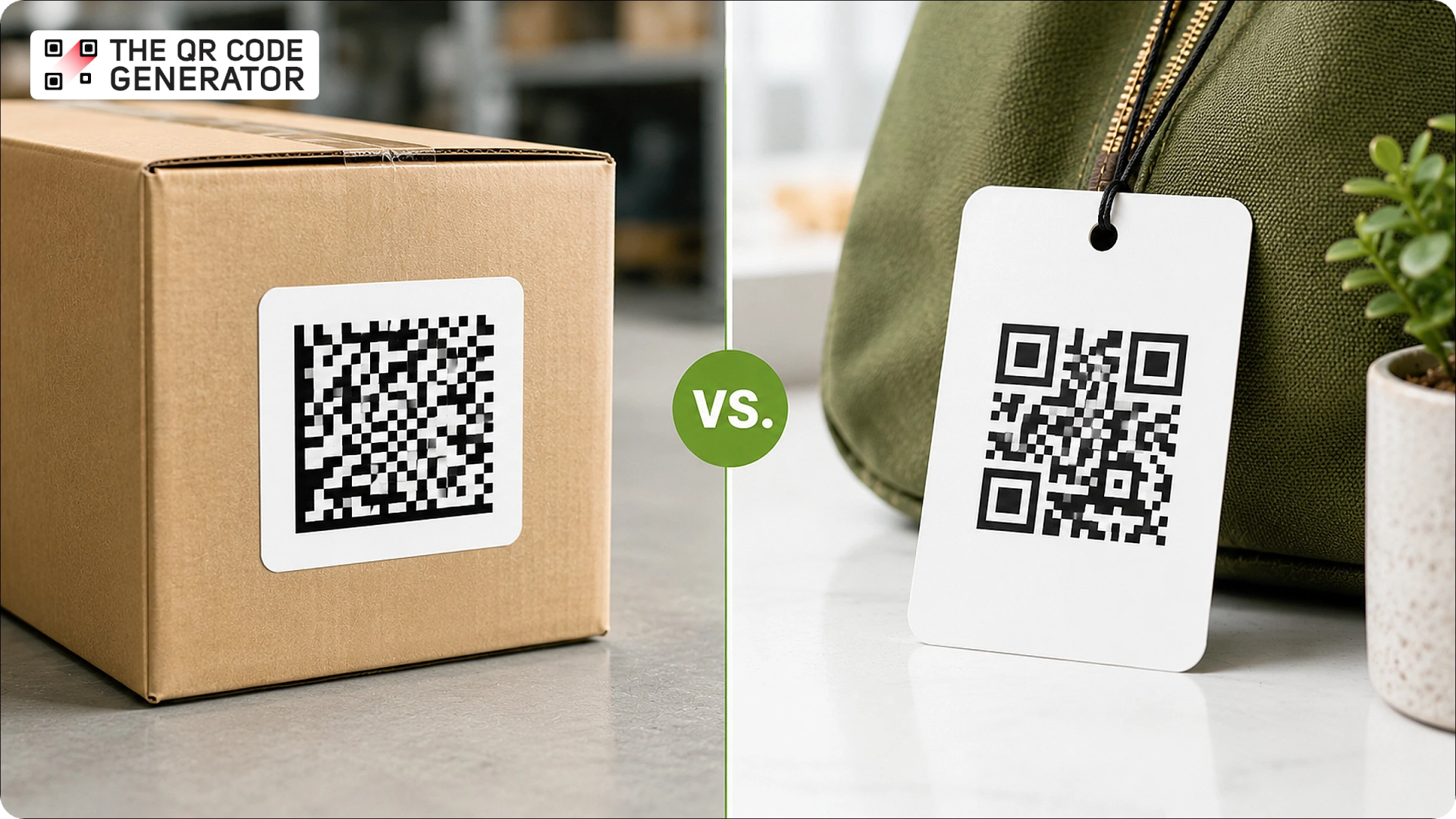
A marketing team prints Data Matrix codes on their campaign posters. Customers try to scan them with their phones, and nothing happens. A manufacturer switches to QR Codes on its assembly-line components. Their ERP system stops reading the labels. A healthcare supplier uses the wrong barcode format on a product shipment, resulting in a regulatory audit failure.
QR Codes and Data Matrix codes were built for different environments, audiences, and problems, and choosing the wrong one costs time, money, and in some industries, compliance status. Treating them as interchangeable is what causes these failures.
This guide breaks down exactly how the two barcodes differ, maps each one to the business scenarios where it performs best, and gives you a decision framework you can use today.
Why choosing between Data Matrix and QR Codes matters
At first glance, Data Matrix codes and QR Codes seem very similar. Both are 2D barcodes that store information and can be scanned quickly. But choosing the wrong barcode can create problems down the road. The differences between Data Matrix and QR Codes affect everything from regulatory compliance and product tracking to customer experience and software compatibility.
Understanding where each barcode performs best helps businesses avoid costly mistakes and choose the right solution from the start.
Your barcode choice impacts compliance
In some industries, barcode selection is not optional.
Medical device manufacturers often use Data Matrix codes to support product identification and traceability requirements. Aerospace and automotive companies also rely on Data Matrix codes to mark parts that must remain readable throughout a product's lifecycle.
Choosing a barcode that does not align with industry requirements can create compliance challenges, complicate audits, and disrupt tracking processes.
Your barcode choice impacts the user experience
When people need to scan a barcode, convenience matters.
Most smartphones can scan QR Codes directly through the camera app, making them easy for customers, patients, and employees to use. This simplicity has helped QR Codes become the standard choice for product information, payments, registrations, menus, and marketing campaigns.
Data Matrix codes are designed primarily for industrial environments. While they perform well in manufacturing and logistics settings, they are generally less convenient for consumer-facing applications.
Your barcode choice impacts business processes
Barcodes do more than store information. They often connect physical products to business systems and workflows.
A Data Matrix code may be used to track parts through manufacturing, inventory management, and quality control processes. A QR Code may connect users to a website, digital manual, support portal, or loyalty program. Because these barcodes are commonly used for different purposes, selecting the right one helps ensure your processes run smoothly and support the outcome you want to achieve.
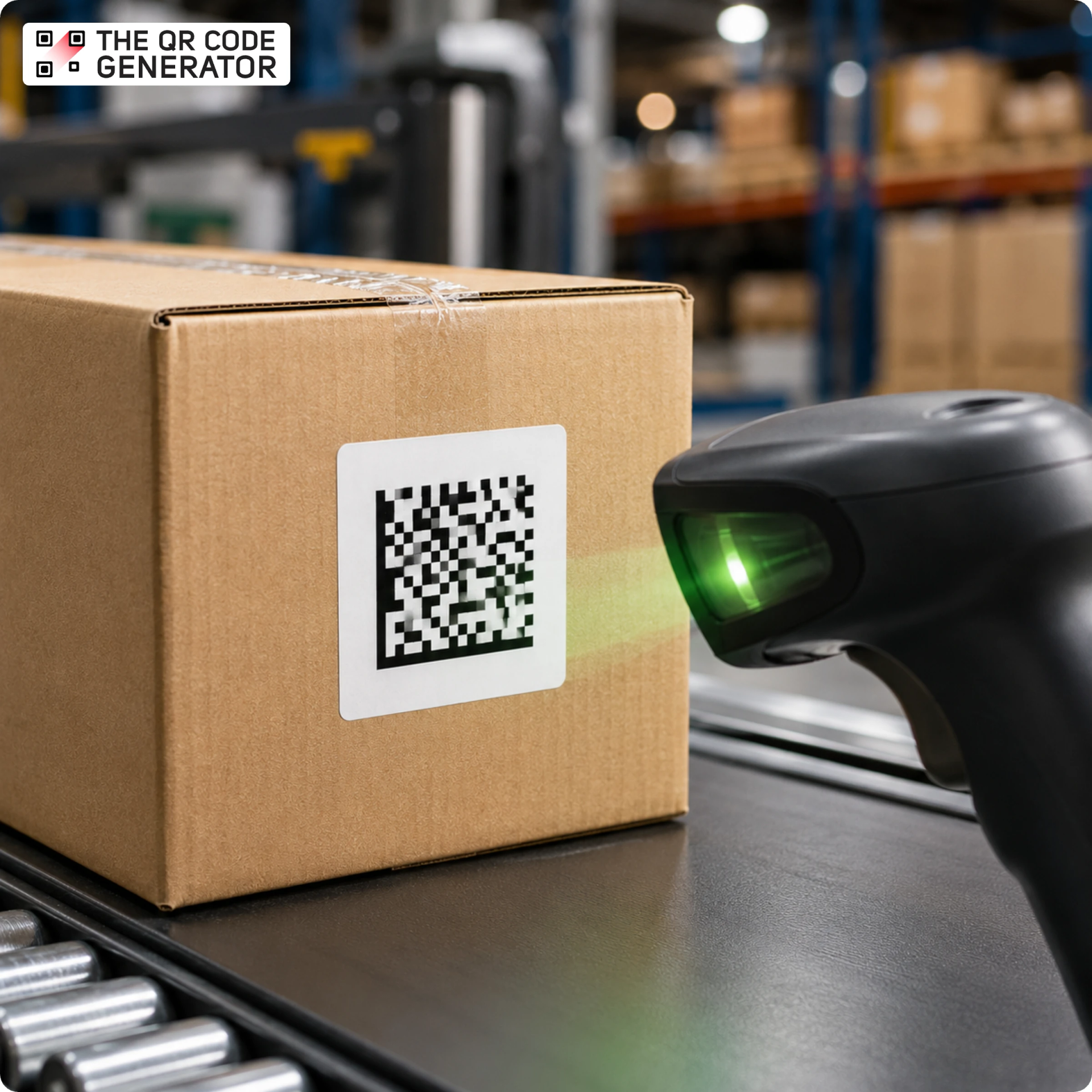
A Data Matrix code is a square or rectangular grid made up of black and white modules, which are small squares that encode data through their pattern. The most recognizable feature is its L-shaped border on two sides, called the finder pattern. This border helps scanners orient the code and decode it accurately, even when the label is small or partially damaged.
Data Matrix codes are designed to pack a lot of data into a very small physical footprint. A code the size of a pencil tip can store enough information to identify a specific component in a global supply chain.
Data capacity and error correction
Data Matrix can store up to 2,335 alphanumeric characters or 3,116 numeric characters. It uses Reed-Solomon error correction, the same method used in CDs and QR Codes, which allows it to remain readable even when a portion of the code is scratched, smudged, or worn away. This makes it well-suited for industrial environments where labels degrade over time.
Where Data Matrix codes are commonly used
Data Matrix is the barcode of regulated industries. You will find it on:
- Medical devices and surgical instruments
- Aerospace and defense components
- Automotive parts marked directly on metal or plastic
- Electronic circuit boards and components
- Pharmaceutical packaging
In most of these cases, the barcode is not printed on a label. It is laser-engraved or chemically etched directly onto the part itself. This is called direct part marking, and it ensures the identifier survives the item's full lifecycle.
What is a QR Code and how does it work?
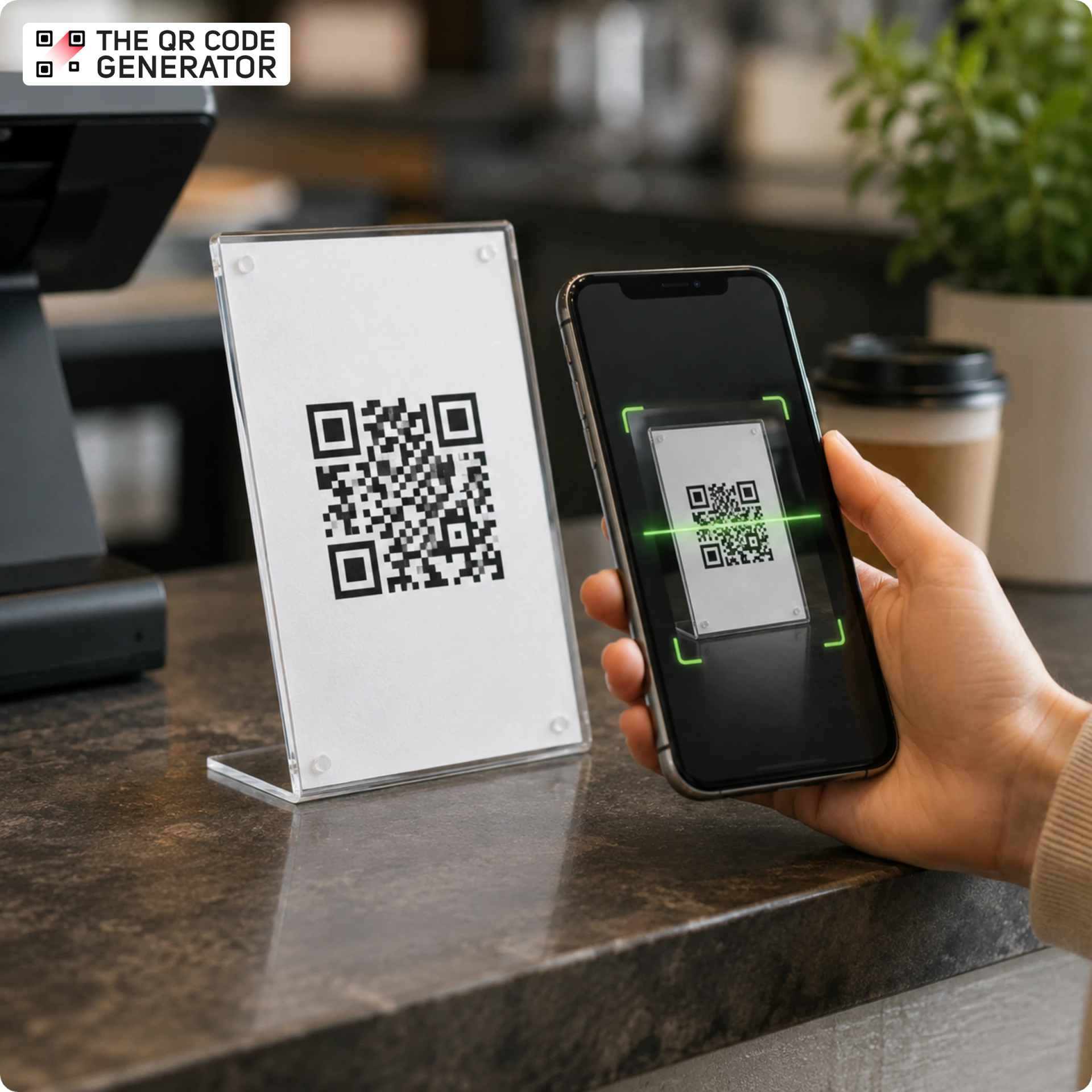
A QR Code is a square matrix barcode with three distinctive square markers in the corners. These position detection patterns allow any scanner, including a smartphone camera, to identify the code's location, orientation, and size at a glance. The result is fast, reliable scanning from almost any angle.
QR Codes were designed with speed and accessibility in mind. The scanning experience is intentionally simple: point your camera at the code, and the action happens automatically.
Data capacity and flexibility
QR Codes can store up to 7,089 numeric characters or 4,296 alphanumeric characters, which is more than enough for a URL, contact card, payment link, or product page.
QR Codes also come in two forms. Static QR Codes encode data permanently at the time of creation. Dynamic QR Codes store a short redirect URL, so the destination can be changed at any time without reprinting the code. Dynamic QR Codes also support analytics, so you can track scan volume, location, and device type.
Where QR Codes perform best
QR Codes are built for human interaction and digital connection. They work best when:
- A customer needs to access a webpage, menu, or offer from packaging or signage
- A business wants to bridge print materials with digital experiences
- Teams need a scannable code on documents, name badges, or presentations
- Speed of deployment and ease of use matter more than permanence
Data Matrix vs. QR Code: Side-by-side comparison
The easiest way to understand the difference between Data Matrix and QR Codes is to compare how they're used in the real world.
| Factor | Data Matrix | QR Code |
|---|---|---|
| Primary use | Product identification and traceability | Customer engagement and digital experiences |
| Who scans it? | Industrial scanners and machine vision systems | Smartphones and 2D imaging scanners |
| Physical size | Works well in very small spaces | Requires more space for the same amount of data |
| Durability | Designed for harsh industrial environments | Designed for everyday commercial use |
| Compliance | Common in regulated industries | Rarely required by regulation |
| Can it be updated? | No | Yes, with dynamic QR Codes |
| Best fit | Manufacturing, healthcare, aerospace, and automotive | Marketing, payments, retail, hospitality, and customer support |
Which barcode should you use?
For most businesses, the answer comes down to the problem you're trying to solve.
Choose Data Matrix if you need
- Product traceability and asset tracking
- Direct part marking on small components
- Long-term durability in harsh environments
- Compliance with industry or regulatory requirements
- High data density in a limited physical space
Data Matrix adoption is typically driven by operational, engineering, or compliance requirements. If your industry mandates it or your workflow depends on it, Data Matrix is usually the right choice.
Choose QR Codes if you need
- Smartphone-friendly scanning
- Customer-facing experiences
- Links to websites, forms, payments, or digital content
- The ability to update destinations without reprinting
- A barcode that multiple teams can use across different workflows
For most non-regulated industries, QR Codes have become the default choice because they are easy to deploy, easy to scale, and familiar to users.
When it makes sense to use both
The choice is not always either-or.
A medical device company might use Data Matrix codes on individual components to support traceability requirements while placing QR Codes on product packaging to provide product information, registration, or support resources.
Similarly, a manufacturer may use Data Matrix codes throughout production and the supply chain while using QR Codes on marketing materials and customer communications.
In these cases, each barcode serves a different audience and purpose within the same organization.
Why QR Codes are the default choice for most businesses
In regulated industries where compliance, permanence, and physical durability are non-negotiable, Data Matrix is the right tool. But for most businesses, the decision comes down to three questions: Who is scanning? What system is receiving the data? And how long does the barcode need to last?
When the answers point to customers, smartphones, and digital workflows, QR Codes are the clear choice. They deploy faster, scale more easily, and work immediately across every audience and channel, without specialized hardware or training.
If you don't have a regulatory requirement, direct part-marking need, or industrial constraint that demands Data Matrix, a QR Code is the right choice.
Frequently Asked Questions
1. What is the main difference between a Data Matrix and a QR Code?
QR Codes are designed for people using smartphones. Data Matrix codes are designed for industrial scanners and machine vision systems. QR Codes are the better choice for consumer-facing and business workflows. Data Matrix is used primarily in manufacturing, healthcare, aerospace, and other regulated industries where compliance or permanent marking is required.
2. Is Data Matrix better than QR Code for small labels?
Yes, in most cases. Data Matrix can store the same amount of data in a smaller physical space than a QR Code. This makes it the preferred format for tiny components, medical devices, and circuit boards where label space is extremely limited. For standard business labels, the size difference rarely matters.
3. Can smartphones scan Data Matrix codes?
Not reliably. Most native smartphone cameras, including those on iOS and Android, do not support Data Matrix scanning without a dedicated third-party app. QR Codes are supported natively by both platforms. If your use case involves any consumer scanning, QR Codes are the practical choice.
4. Are QR Codes compliant with industrial standards?
QR Codes are widely used and internationally standardized under ISO/IEC 18004. However, they are not specifically mandated in the same regulated industries that require Data Matrix. If your industry or supply chain partner specifies Data Matrix under ISO/IEC 16022 or a related standard, a QR Code will not satisfy that requirement.
5. Can I use QR Codes and Data Matrix codes together?
Yes. Many businesses use both formats for different purposes within the same operation. For example, a product might carry a Data Matrix code on the component itself for internal traceability and a QR Code on the outer packaging for customer interaction. The two formats serve different audiences and systems, so using both makes sense when a business operates across both regulated and consumer-facing workflows simultaneously.
6. Which barcode is better for marketing and customer engagement?
QR Codes, without question. They are instantly recognized, scan natively on any smartphone, and can be updated dynamically without reprinting. Data Matrix codes are not designed for consumer use and are not recognized outside industrial contexts. For any marketing, sales, or customer-facing application, QR Codes are the right choice.