




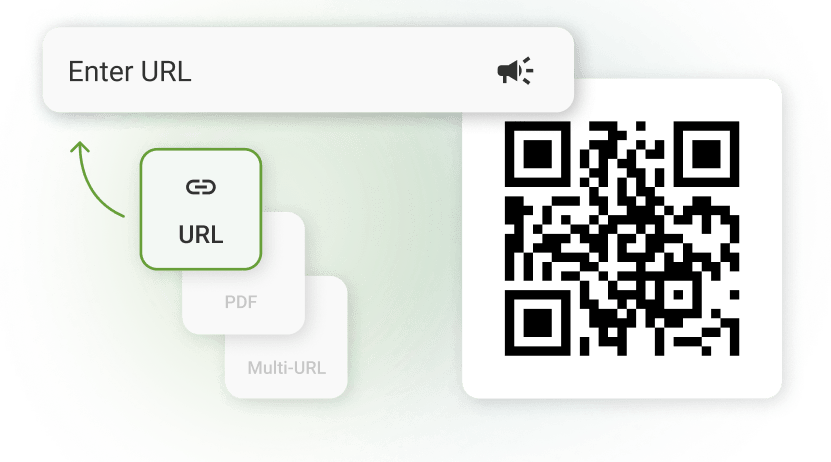


 New Dynamic QR Code
  New Static QR Code
Many people have stood at a grave, read a name and two dates, and realized how little a headstone can say about a person’s life. A few words can mark someone’s resting place, but they cannot fully preserve their voice, relationships, memories, or personal story.
A memorial QR Code is a digital link placed on a headstone, grave marker, or memorial plaque that opens an online tribute page when scanned with a smartphone. The memorial page can hold photographs, videos, written memories, audio recordings, and messages from family members across generations.
This guide explains how memorial QR Codes work, what to include on the memorial page, how to choose materials that last outdoors, and why a dynamic QR Code matters for long-term link reliability. It also covers the practical decisions that help families create a memorial that remains accessible for years.
Table of contents
- The limits of what a headstone can hold
- What is a memorial QR Code?
- What can you put on a memorial QR Code landing page?
- How to create a memorial QR Code with TQRCG
- Best practices for a QR Code on grave markers
- Create a memorial page that remains accessible for years
- Frequently asked questions
The limits of what a headstone can hold
A headstone marks a resting place and preserves basic information, such as a name, birth date, and death date. Families often want it to preserve more than that, but physical space on stone is limited.
A headstone has limited space
Most monument companies allow only a small amount of text on headstones beyond the name and dates. In many cases, that space fits a short epitaph, religious verse, or a few personal words.
That limitation matters because a person’s life cannot be reduced to a few lines of text. Memories, relationships, photographs, milestones, and personal stories usually exist outside what a headstone can physically hold.
Not every family chooses a traditional grave marker
According to the National Funeral Directors Association’s 2025 Cremation and Burial Report, the U.S. cremation rate reached 63.4% in 2025 and is projected to rise to 82.3% by 2045. Many families now choose memorials that do not involve a traditional grave marker.
Some families keep ashes at home, while others choose memorial benches, trees, or shared remembrance spaces. In these situations, there may not be a permanent physical place that future generations can easily return to.
Personal memories fade over time
The people closest to someone often carry detailed memories of their voice, routines, stories, and relationships. Over time, those details become harder to pass down.
By the second or third generation, many families are left with only a name, a few photographs, and scattered stories. Physical memorials preserve a place and a date, but they rarely preserve the fuller context of a person’s life.
These limitations are part of the reason many families now add a digital layer to physical memorials. A memorial QR Code on headstones creates a way to preserve stories, photographs, and personal history beyond what can fit on a stone alone.
What is a memorial QR Code?
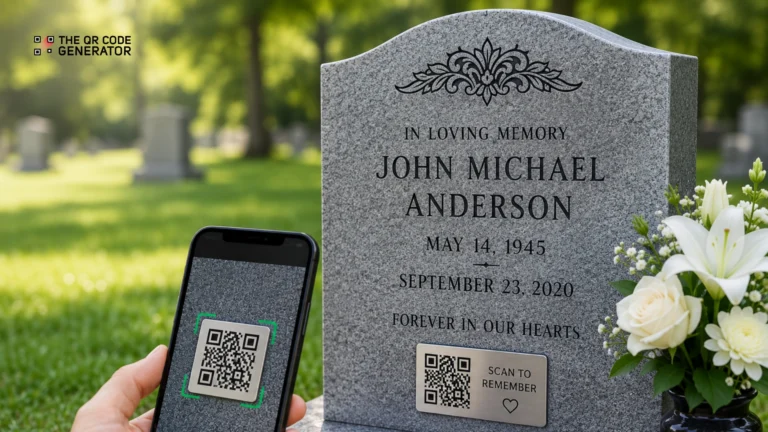
A memorial QR Code is a scannable code placed on a headstone, grave marker, urn, or memorial plaque that opens a digital tribute page on a smartphone. The tribute page can contain photographs, videos, written memories, audio recordings, or other personal material connected to the person being remembered.
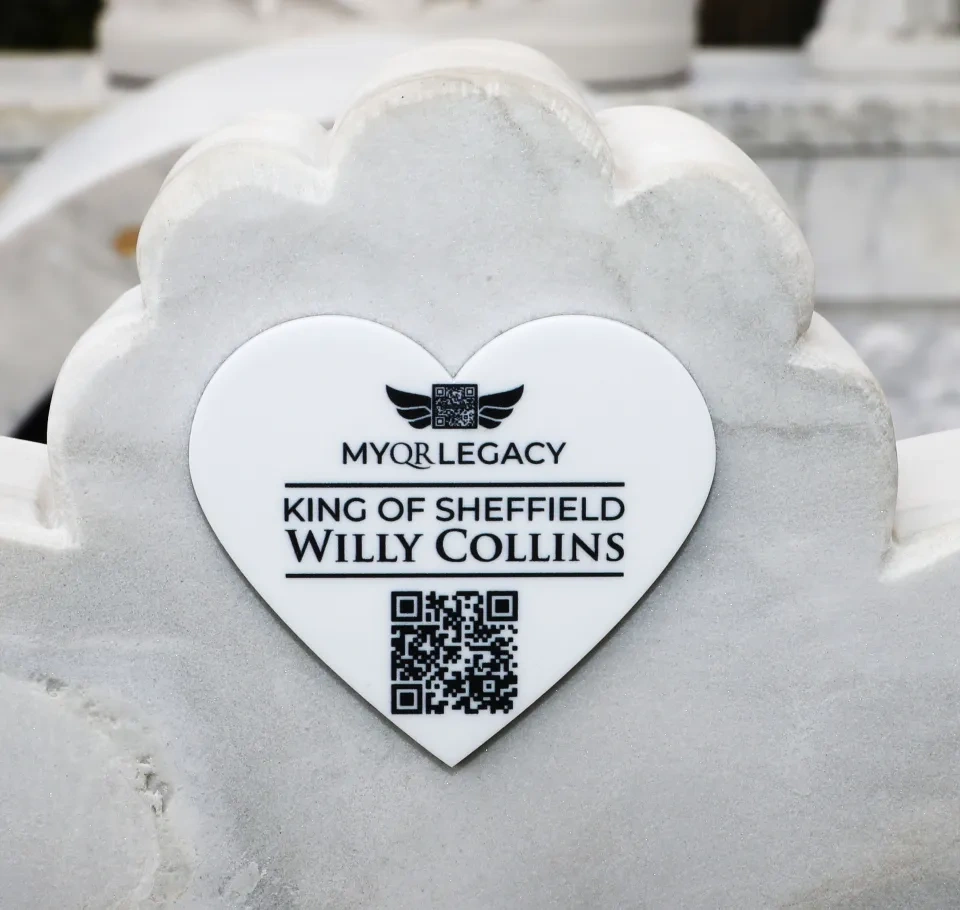
One example of a QR Code on the headstone is the memorial of bare-knuckle boxer Willy Collins, also known as the “King of Sheffield.” Visitors to the memorial can scan a QR Code on the headstone to read about his life and leave messages for the family.
How does a memorial QR Code on a grave work?
A memorial QR Code does not store photographs, videos, or written memories inside the code itself. The QR Code simply directs visitors to a web page where the memorial content is hosted. That separation is important because the destination page can later be updated, moved, or expanded without replacing the physical plaque attached to the grave or headstone.
The scanning process is simple and does not require any technical setup on the part of visitors.
- The visitor notices the QR Code plaque on or near the headstone.
- They open the camera app on their smartphone.
- They point the camera at the QR Code.
- A notification appears on the screen.
- They tap the notification to open the memorial page in a browser.
Most modern iPhone and Android devices scan QR Codes directly through the built-in camera app, so visitors do not need to download a separate application. Families usually place the QR Code on a small weather-resistant plaque that remains visible and easy to scan outdoors.
What do visitors see when they scan a QR Code on a grave?
The QR Code usually opens a memorial page that can be simple or detailed, depending on what the family wants to preserve. Some families create a small photo archive, while others build a larger digital memorial with videos, written stories, timelines, and guestbook messages.
Some memorial parks, like the Resthaven Memorial Park in the U.S., now offer QR Code memorials that link physical grave markers to online tribute pages. These pages often include biographies, photographs, videos, and written memories that visitors can access directly from the headstone.
Families also control where the memorial page is hosted. The QR Code can point to a dedicated memorial website, a private family page, a photo album, or another online tribute platform.
What can you put on a memorial QR Code landing page?
The memorial page is where families preserve the details that cannot fit on a physical headstone. Some pages stay simple with a few photographs, while others become long-term digital archives that multiple generations can contribute to over time.
Biography and life timeline
A biography explains the person’s life beyond the basic facts listed on a grave marker. Families often include where the person grew up, the work they did, the relationships they valued, and the milestones that shaped their life.
A chronological timeline also helps younger family members understand the broader context of a person they may never have met. Even a short timeline can preserve details that are otherwise lost over time.
Photos and video tributes
Photographs and videos are usually the most visited parts of a digital memorial. Families often upload images from different stages of life, rather than focusing solely on formal portraits or final photographs.
Home videos, voice recordings, and everyday moments often carry more emotional value than written text alone. One widely shared TikTok video from 2023 showed a visitor scanning a grave QR Code and opening a video of a couple dancing together. The clip received millions of views because it demonstrated how digital memorials can preserve moments that a traditional inscription cannot capture.
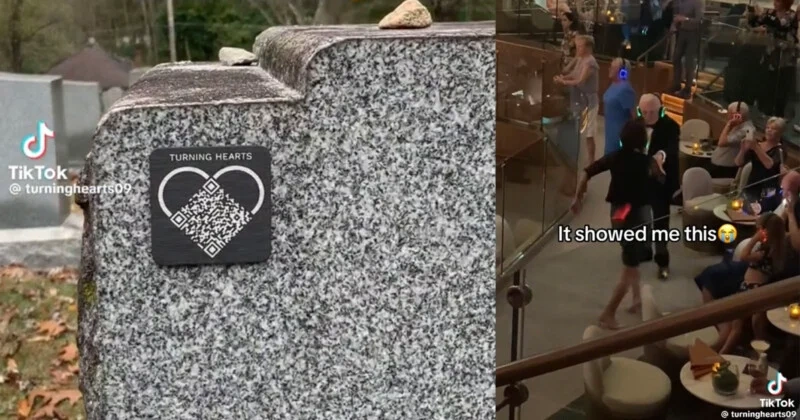
Most memorial pages also support YouTube or Vimeo links, making it easier to store larger video files without relying entirely on the memorial platform.
A virtual guestbook
A virtual guestbook gives friends and relatives a place to leave written memories, short tributes, or condolences. This feature becomes especially valuable for families spread across different cities or countries who may not be able to visit the grave in person.
Some memorial systems also help visitors locate and access graves remotely. In La Paz, a Jewish cemetery in Uruguay added QR Codes to headstones so visitors can access information about specific graves digitally. The system also allows people to locate tombstones remotely and explore parts of the cemetery online.
If the memorial page is public, review guestbook submissions before publishing them and avoid sharing personal information about living family members.
A charitable link or legacy project
Some families include links to charities, foundations, scholarship funds, or community projects connected to the person’s life. These links give visitors a practical way to support a cause that mattered to the person being remembered.
Once the memorial page is ready, the next step is to create a QR Code that reliably links to it for years.
How to create a memorial QR Code with TQRCG
Many memorial QR Code services sell bundled kits that combine the physical plaque, QR Code, and hosting platform into a single package. That setup is convenient, but it also means the memorial depends entirely on one company’s platform and pricing structure over time.
A more flexible approach is to host the memorial page wherever you want and create a QR Code that points to it. That way, the memorial page can be moved or updated later without replacing the physical plaque.
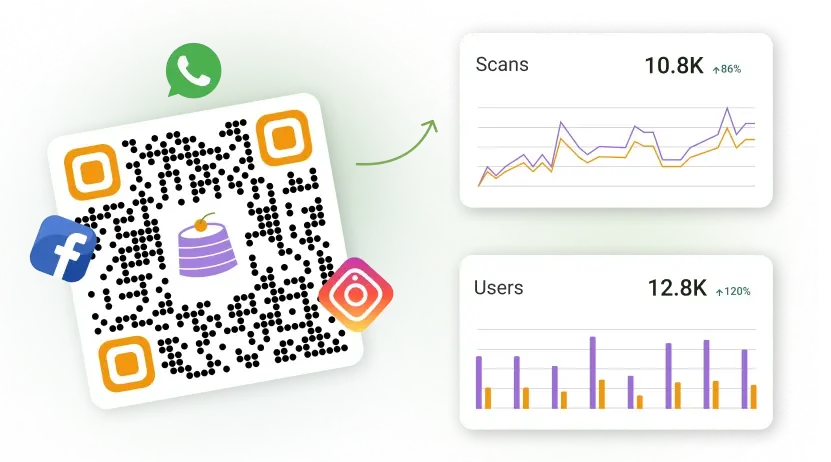
This is where The QR Code Generator (TQRCG) fits. TQRCG allows families to create dynamic QR Codes that can be updated later if the memorial page changes.
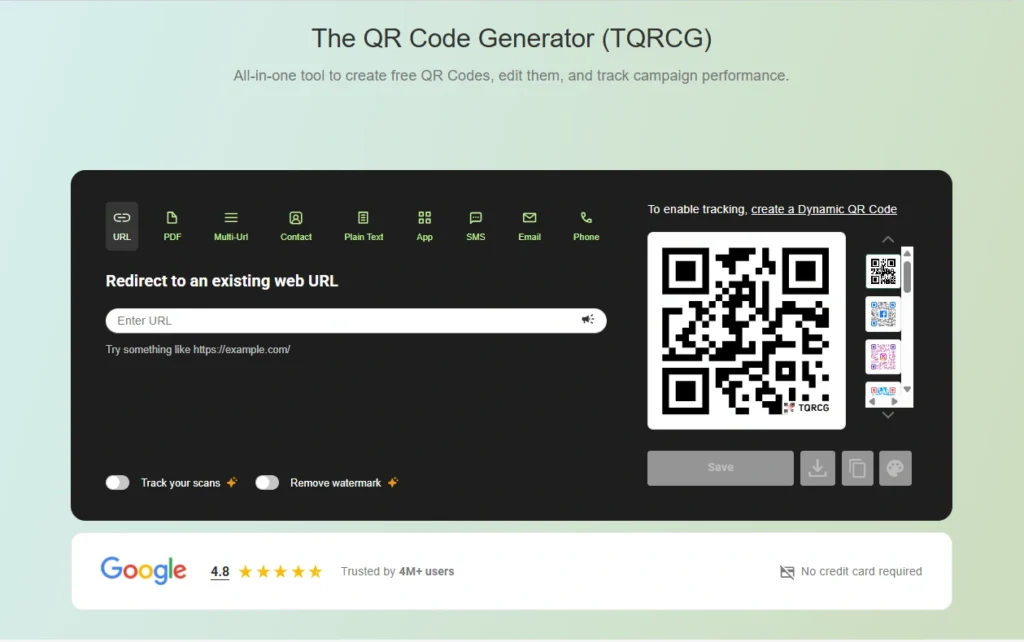
Step 1: Choose where the memorial page will live
Before creating the QR Code, decide where the memorial content will be hosted. Most families choose one of the following three options.
- Dedicated memorial platforms: These platforms are designed specifically for online tributes and are usually easy to set up. The tradeoff is long-term dependence on the platform provider.
- A family-owned website or domain: This option gives the family the most long-term control because they manage the hosting directly. It requires more setup and ongoing domain renewal costs.
- Free third-party platforms: Some families use Google Sites, Google Photos albums, or similar free tools. These options are simple to maintain, but families should still consider long-term platform stability.
The QR Code simply points to the memorial page URL, regardless of where the page is hosted.
Step 2: Create a dynamic QR Code
After the memorial page is ready, go to TQRCG and create a free account.
Once logged in, paste the memorial page link into the generator and click Next. You will get a free dynamic QR Code, which you can then customize.
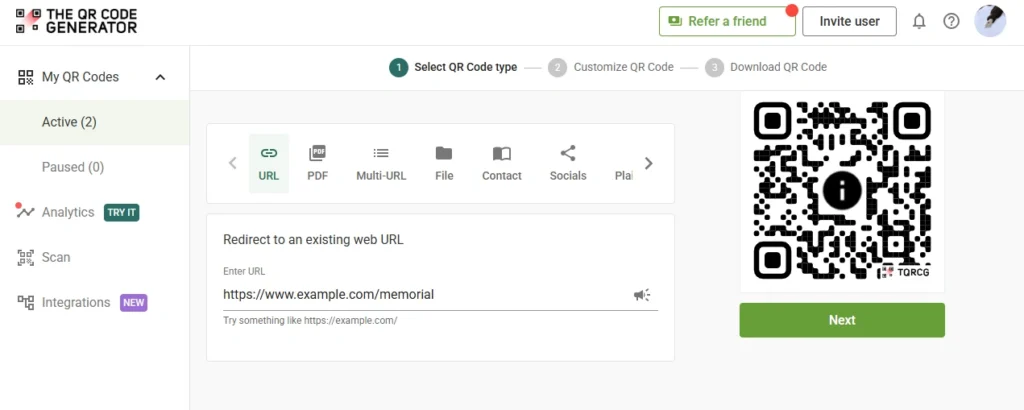
A dynamic QR Code uses a redirect link that can later point to a different location if the memorial page changes. That flexibility matters for permanent installations like headstones because websites, hosting providers, and URLs often change over time.
If the memorial page ever moves, families can update the destination link without replacing the engraved plaque.
Step 3: Customize for outdoor use
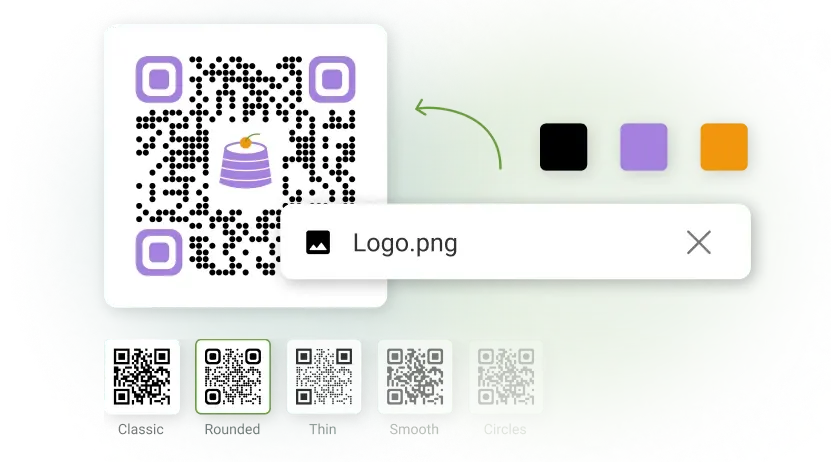
Before downloading, customize your QR Code in TQRCG.
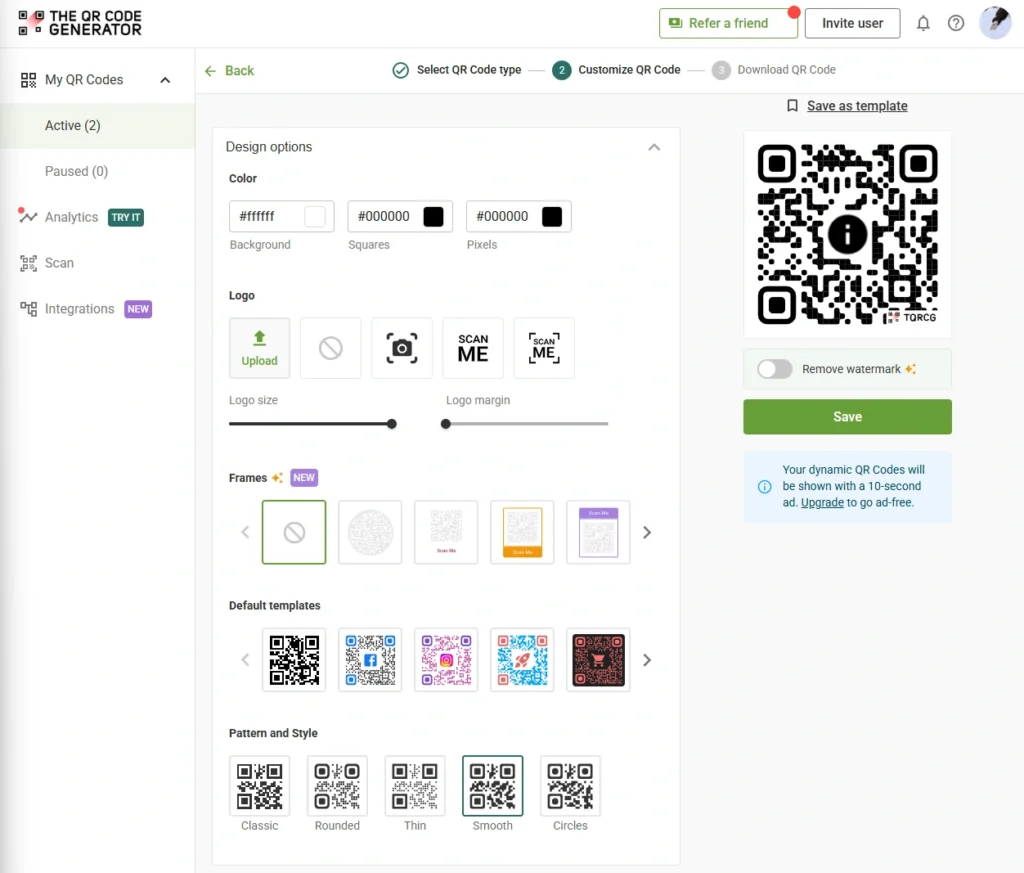
Outdoor QR Codes need stronger readability standards than indoor marketing materials. Four design choices affect scanning reliability the most.
- Use high contrast: Dark QR Codes on light backgrounds scan more reliably outdoors and in changing light conditions.
- Choose a large enough size: Most memorial plaque providers recommend a minimum size of 2 × 2 inches for reliable scanning at arm’s length.
- Add a short instruction below the code: A short phrase like “Scan to remember” helps visitors understand what the QR Code does.
- Keep a clear quiet zone around the code: The empty border around the QR Code improves scan recognition. Decorative elements placed too close to the edges can interfere with scanning.
Step 4: Download and engrave the QR Code
Download the QR Code in SVG format whenever possible because vector files remain sharp during engraving and resizing. High-resolution PNG files also work if the SVG format is unavailable.
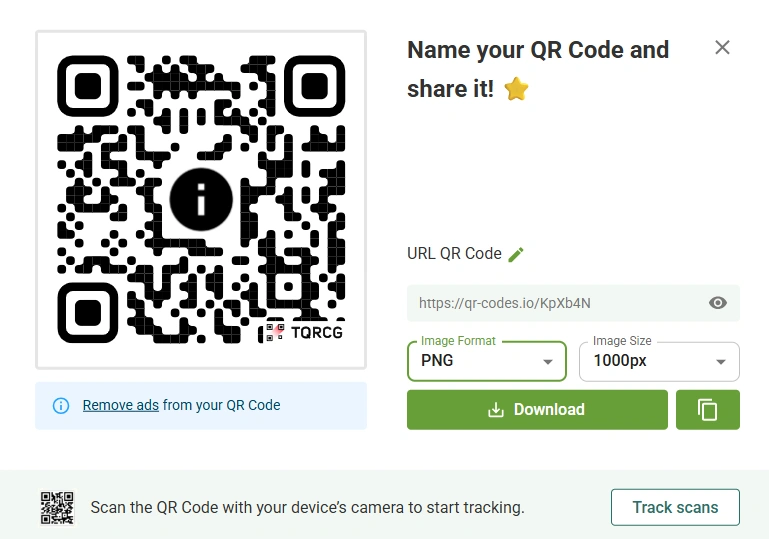
Most families place the QR Code on a weather-resistant plaque attached to the headstone, memorial bench, or urn.
Below are materials commonly used for outdoor memorial plaques.
- 316 stainless steel: This material is highly durable and can last more than 25 years outdoors.
- Ceramic-coated metal: This material offers strong weather resistance and better color stability over time.
- Anodized aluminum: This material is more affordable and usually lasts 10 to 15 years outdoors.
Before installation, scan the finished plaque outdoors in different lighting conditions to confirm that the QR Code remains easy to read.
Best practices for a QR Code on grave markers
A memorial QR Code is usually installed with the expectation that it will remain usable for many years. Long-term reliability depends on the material, placement, hosting setup, and privacy decisions made during installation.
Check cemetery rules before installation
Most U.S. cemeteries permit small non-invasive additions to headstones, but policies vary widely. Getting it wrong means removing a plaque that has already been engraved.
National cemeteries and veterans cemeteries often follow stricter rules for government-issued grave markers and attached additions. Some locations may not allow individual QR Code plaques at all. Contact the cemetery directly before engraving or installing anything because policies vary by location.
Design for outdoor readability
High contrast and quiet zone are non-negotiable for outdoor scanning. A code that touches a decorative engraving on three sides will fail to scan more often than not. A 2 × 2-inch black-on-white code with a clear half-inch border is the safest baseline.
Control privacy intentionally
A grave is a public place, which means anyone visiting the cemetery can scan the QR Code unless the memorial page is restricted.
Families should decide these privacy settings before publishing the memorial page.
- Whether the page should remain public or require an invitation
- Whether guestbook messages should be moderated before appearing publicly
- Whether personal information about living relatives should remain private
Public memorial pages can sometimes attract spam or unwanted attention, especially when they contain addresses, family details, or contact information.
Keep an offline backup of all content
Digital memorials last longer when families maintain copies of the files outside the hosting platform.
These backup practices reduce the risk of losing photographs, videos, or written memories over time.
- Download or export memorial files at least once a year
- Store copies in a shared cloud folder accessible to multiple family members
- Save the QR Code destination URL and account login information in a secure place
If the hosting platform changes or shuts down later, families can rebuild the memorial elsewhere and update the dynamic QR Code without replacing the physical plaque.
Create a memorial page that remains accessible for years
A memorial QR Code extends what a physical headstone can preserve by connecting visitors to photographs, videos, written memories, and personal stories online.
A grave installation is permanent, which means the QR Code attached to it needs to remain reliable for decades, not just years. TQRCG’s dynamic QR Codes give families the flexibility to update, redirect, or expand the memorial page long after the plaque has been engraved, without ever touching the stone again
Create your memorial QR Code with TQRCG.
Frequently asked questions
A memorial QR Code is a weatherproof plaque on a headstone, urn, or grave marker that opens a digital tribute page when scanned with a smartphone. Instead of just a name and two dates in stone, visitors can watch videos, read a biography, and browse photographs — all without a special app on most modern phones.
With a dynamic QR Code, you simply log into the dashboard, update the destination URL, and the plaque starts scanning correctly again immediately. With a static QR Code, there is no fix. The destination is baked in permanently, so if the website goes offline, the plaque becomes permanently unusable. This is why static codes should never be used on a permanent grave marker.
Yes, and you should confirm this before purchasing anything. Rules vary widely. Some cemeteries allow a small medallion on a privately owned monument, while others restrict additions by size, material, or mounting method, and some require professional installation. U.S. National Cemeteries do not currently permit QR Codes on grave markers at all, so if your loved one is interred in one, check the VA’s current guidelines directly.
Yes. The plaque attaches with weatherproof adhesive and can be removed later if needed. It adheres best to smooth, polished surfaces. For rough or porous stone, clean the surface thoroughly and apply extra pressure.
At minimum, 1 inch by 1 inch, though 1.5 to 2 inches is ideal for outdoor use. Larger codes are more tolerant of wear and dirt. Two inches square is the recommended standard for grave plaques. When generating the code, select the highest error correction setting available, usually labeled Level H. This adds redundancy so the code remains scannable even after years of weathering or partial surface damage.
Yes. TQRCG can point the QR Code to any URL you provide, whether that is a memorial platform, YouTube tribute, Google Photos album, or personal website. Because the code is dynamic, you can update the destination at any time without touching the physical plaque, so if a platform shuts down or changes, a quick dashboard update is all it takes.
