





 New Dynamic QR Code
  New Static QR Code
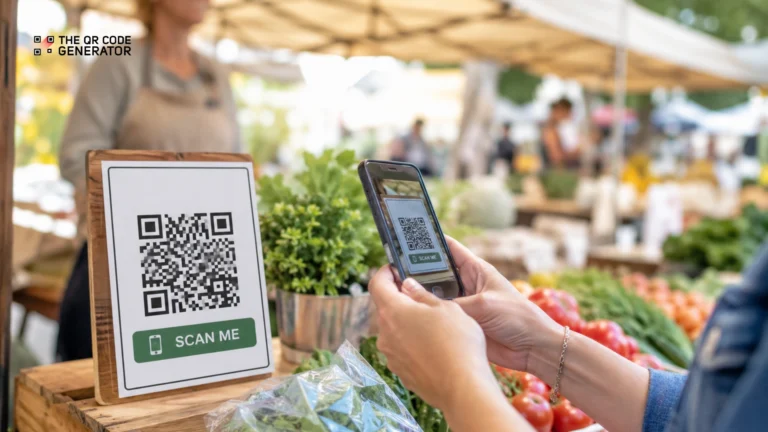
Your stall gets four hours on market day and your products sell well, but most customers never come back, mainly because there is no easy way to stay connected after they leave. Farmers’ market QR Codes solve that problem.
A farmers’ market QR Code is a scannable marketing tool that bridges in-person shoppers to digital actions, including pre-orders, email sign-ups, reviews, payments, and loyalty programs, without slowing down your booth. If your market accepts WIC or e-FMNP benefits, your customers already scan QR Codes to complete purchases, so adoption anxiety is not an issue.
This guide covers seven QR Code use cases ranked by revenue impact, a static vs. dynamic QR Codes cost comparison, an outdoor placement checklist, and a simple way to track which signs are actually bringing in sales.
Table of contents
- Why QR Codes drive growth for farmers’ market vendors
- Which QR Code type is best for a farmers’ market?
- 7 farmers’ market QR Code ideas that drive sales
- How to create a farmers market QR Code with TQRCG
- How to improve QR Code performance at a farmers’ market
- Grow your business at the farmers’ market with TQRCG
- Frequently asked questions
Why QR Codes drive growth for farmers’ market vendors
QR Codes give farmers’ market vendors a simple way to stay connected with customers after market day ends. There are four main reasons they work well for small vendors.
1. QR Codes are already familiar to your customers
QR Codes are now part of everyday life, with more than 102 million Americans expected to scan QR Codes by 2026, according to eMarketer. At many farmers’ markets that accept Women, Infants, and Children (WIC) or Electronic Farmers Market Nutrition Program (e-FMNP) benefits, customers already use QR Codes to redeem government nutrition benefits at checkout. That means the habit is already there, and getting a customer to scan your sign is a small ask.
2. QR Codes keep customers connected after market day
A farmers’ market stall is built for short interactions. QR Codes give you a way to extend those interactions without any extra effort at the booth. A customer who scans your sign can join your email list, place a pre-order, or follow your schedule, all from their phone before they even get home. Over time, that turns casual buyers into repeat customers.
3. QR Codes turn a small contact list into steady revenue
You do not need thousands of subscribers for email or SMS marketing to work. Farmers’ market QR Codes help you build a list of customers who have already bought from you and want to hear more. A small, engaged list of 50 to 100 people can generate consistent weekly orders.
4. QR Codes are low cost and easy to start
QR Codes cost very little to set up and require no technical experience. Many vendors start with a single printed sign and one free dynamic QR Code, then expand as their needs grow. The setup takes minutes and the cost of printing a sign is often the biggest expense involved.
Which QR Code type is best for a farmers’ market?
Dynamic QR Codes are the better choice for most farmers’ market vendors. There are two types of QR Codes available, and the difference between them affects both your printing cost and your ability to track results.
| Feature | Static QR Code | Dynamic QR Code |
| Can edit destination later | No | Yes |
| Requires reprinting if link changes | Yes | No |
| Best for permanent links | Yes | Yes |
| Best for seasonal offers | No | Yes |
| Scan analytics available | No | Yes |
| Useful across multiple markets | Limited | Strong |
| Long-term flexibility | No | Yes |
Static QR Codes are free to generate and simple to create. Static QR Codes become a problem the moment anything changes. If you update your payment link, switch platforms, or run a seasonal offer, every printed sign with a static QR Code becomes useless. You would need to reprint everything from scratch.
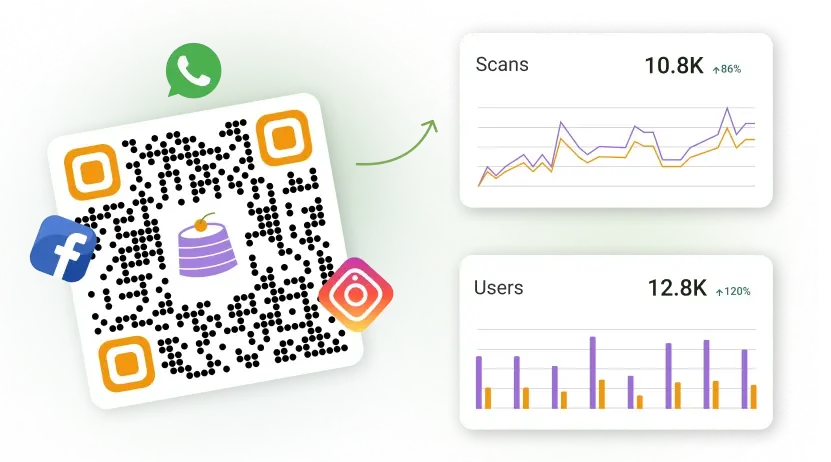
Dynamic QR Codes cost a small fee in most generators but let you update the destination link at any time without reprinting. These QR Codes also provide scan data, including when customers scanned, which device they used, and which sign performed best. For vendors selling across multiple markets or updating offers seasonally, that flexibility pays for itself quickly.
The QR Code Generators (TQRCG) lets you create dynamic QR Codes that are editable and trackable from a single dashboard. You can start with two forever-free dynamic QR Codes and unlimited static QR Codes to test the setup before committing to a paid plan. You can also check the best QR Code generators to gain more information about
7 farmers’ market QR Code ideas that drive sales
These 7 QR Code ideas are ordered by revenue impact, so you know exactly where to start. Begin with one or two that fit your current setup and add more as your booth grows.
1. Farmers’ market pre-order QR Code
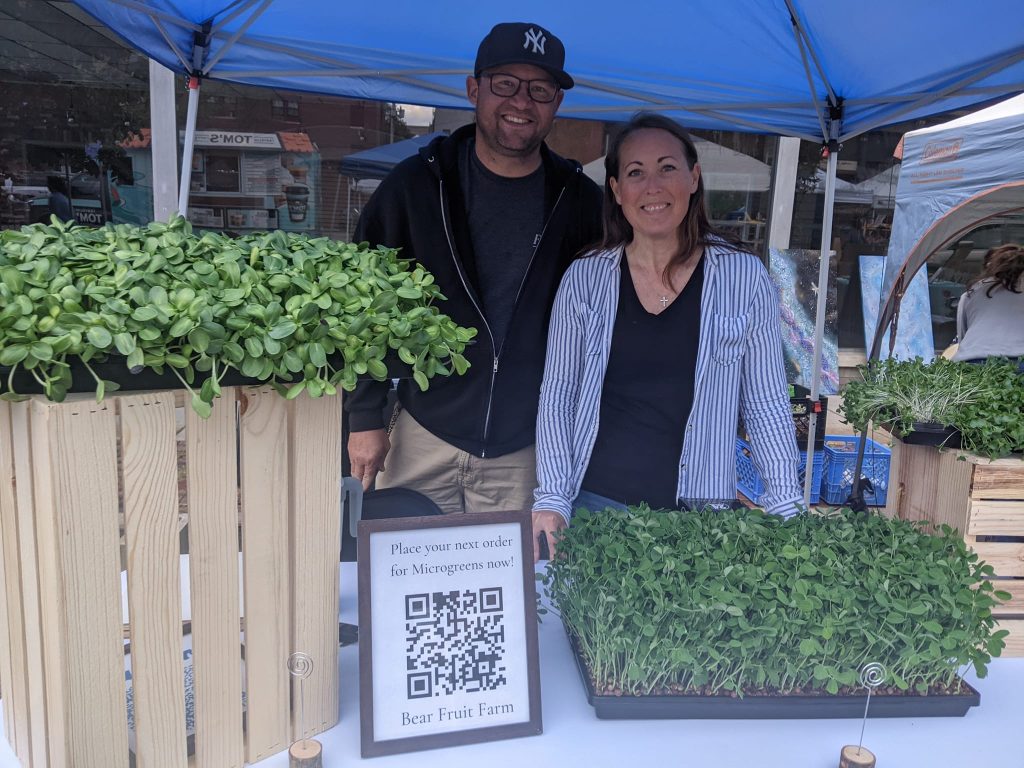
A farmers’ market pre-order QR Code sends customers to an online order form where they can reserve products for the next market day or request home delivery. The pre-order QR Code is one of the highest-impact tools a farmers’ market vendor can use because it captures revenue that would otherwise be lost when a product sells out or a customer leaves without buying.
Place the sign near your bestselling products with a clear headline like “Order next week’s strawberries now.” You can also print a small business card version for customers to take with them as they leave the stall.
📌 Suggested sign copy: “Want this next week? Scan to pre-order and skip the wait.”
2. Farmers’ market email and SMS sign-up QR Code
A farmers’ market email and SMS sign-up QR Code sends customers to a short form where they can subscribe to your updates, availability alerts, or weekly newsletter. Social media followers can disappear overnight if an algorithm changes, but an email or SMS list is an audience you own completely.
Email marketing generates an average return of $36 for every $1 spent, making it one of the most cost-effective channels available to small vendors. A verified list of 50 to 100 engaged subscribers can drive consistent weekly orders without any paid advertising.
📌 Suggested sign copy: “Get first pick every week. Scan to join our availability list.”
3. Farmers’ market payment QR Code
A farmers’ market payment QR Code lets customers pay digitally through their preferred app without needing a card reader. Around 58% of people say having a card payment option makes them more likely to spend more, according to research on cashless transactions.
The table below compares the most popular payment options for vendors doing under $2,000 per month, based on transaction fees, record-keeping quality, and whether the option works without an internet connection.
| Option | Typical rate | Record keeping | Offline use | Notes |
| Square Tap-to-Pay | 2.6% + $0.15 | Excellent | Yes | Strong primary option |
| Venmo Business QR Code | 1.9% + $0.10 | Moderate | No | Useful backup option |
| PayPal / Zettle | 2.29% + $0.09 | Good | Partial | Good for PayPal users |
| Apple Pay / Google Pay | Standard card-present rate | Excellent | Depends on processor | Tap-focused |
| Cash App / Zelle | Varies | Limited | No | Better as backup only |
Square Tap-to-Pay is a strong primary option because reporting is robust and reconciliation is straightforward. Venmo Business is a good secondary option for customers who already prefer it.
You can use a multi-URL QR Code to offer multiple payment options. If you switch providers later, you update the link in your dashboard without reprinting the sign.
📌 Suggested sign copy: “Pay your way. Scan to pay with Venmo, PayPal, or card.”
4. Farmers’ market product story QR Code
A farmers’ market product story QR Code links customers to a page about your farm, your growing practices, or the origin of a specific product. Customers who understand what makes a product different are more likely to pay a premium for it.
These farmers’ market QR Codes work especially well for products such as honey, preserves, specialty produce, baked goods, and handmade items, where the process behind the product adds to its value. You can link to a short video, a photo story, or a simple webpage and update the content seasonally without reprinting your signs.
📌 Suggested sign copy: “Curious how this is made? Scan to see the farm.”
5. Farmers’ market Google reviews QR Code
A Google reviews QR Code is a scannable code that takes customers directly to your Google review page, where they can leave a rating in under a minute. Farmers’ market Google reviews QR Codes build local search visibility and help new customers find and trust your business before they visit.
The best time to ask for a review is immediately after a purchase, while the experience is still fresh. Place the sign near your checkout area or include it on your packaging so the ask feels natural rather than pushy.
📌 Suggested sign copy: “Enjoying our products? Scan to leave us a quick review.”
6. Farmers’ market loyalty program QR Code
A farmers’ market loyalty program QR Code sends customers to a simple mobile page where visits or purchases are tracked toward a reward. Loyalty programs make 72% of customers spend more with their preferred brands, making them one of the most effective tools for increasing order frequency.
Farmers’ market loyalty program QR Codes work best for products people buy regularly, such as coffee, eggs, baked goods, sauces, and fresh produce. The program does not need to be complex. A simple browser-based punch card that rewards every fifth purchase is enough to give customers a reason to come back.
📌 Suggested sign copy: “Buy 5, get 1 free. Scan to start your loyalty card.”
7. Farmers’ market schedule QR Code
A farmers’ market schedule QR Code directs customers to a mobile page showing your weekly market locations, hours, and any seasonal updates. Vendors who sell at more than one market each week often lose repeat customers simply because those customers do not know where to find them next.
One dynamic QR Code can serve all your locations at once. When your schedule changes, you update the page in your dashboard and every printed sign across every market stays current automatically.
📌 Suggested sign copy: “Find us this weekend. Scan to see where we’ll be.”
How to create a farmers market QR Code with TQRCG
The QR Code Generator (TQRCG) is a simple tool that lets you create, edit, and track farmers’ market QR Codes from one dashboard. Creating your first QR Code takes under five minutes. Here are the four steps to get started.
- Go to The QR Code Generator and create a free account.
- Choose the type of destination you want to link to, such as a pre-order page, sign-up form, or payment link.
- Enter the destination URL and customize the appearance of your generated QR Code.
- Download the QR Code and add it to your printed sign or packaging.
If you expect your destination link to change at any point, select a dynamic QR Code when creating. Dynamic QR Codes let you update the destination from your dashboard without reprinting the sign.
How to improve QR Code performance at a farmers’ market
Most QR Codes underperform not because of the code itself, but because of small setup mistakes that are easy to fix. Here are four common problems farmers’ market vendors face and straightforward fixes for each.
1. Customers do not know why they should scan
Every QR Code needs a clear benefit statement above or below it. Customers are more likely to scan when they know exactly what they are getting. Use specific calls to action, such as “Pre-order next week’s strawberries,” “Leave us a review,” or “Join our weekly availability list,” rather than a generic “Scan here.”
A short verbal mention at checkout works well, too. A one-sentence prompt like “You can scan here to pre-order for next week” costs nothing and often outperforms a better-designed sign.
2. The QR Code does not scan or gets ignored
A QR Code that works fine indoors can fail in bright sunlight or glare. Use a dark code on a white or light background, avoid glossy finishes that reflect light, and print the code at a minimum of 2 × 2 inches.
Placement matters just as much as design. Signs placed flat on a table get far fewer scans than signs placed at eye level near the checkout area or on packaging where customers naturally look.
3. The printed link is already out of date
Many vendors print a sign and later realize the destination page has changed. This happens most often with payment links, pre-order pages, and seasonal offers. Use dynamic QR Codes for any destination that may change over time.
The QR Code Generator (TQRCG) lets you update the destination link from your dashboard at any time, so the printed sign stays the same and nothing needs to be reprinted.
4. The scan happens but the customer drops off
A QR Code can earn a scan and still lose the customer if the destination page is slow, unclear, or hard to use on a phone. Test the full journey on your own phone before market day. The next step should be obvious within the first few seconds of landing on the page.
TQRCG also lets you assign a separate dynamic QR Code to each sign so you can review scan data weekly and know which signs are driving real outcomes like orders or sign-ups, not just scans.
Grow your business at the farmers’ market with TQRCG
Most vendors start with one QR Code and build from there. If customers regularly miss out because products sell out fast, begin with a pre-order QR Code. If you want more repeat buyers, start with an email sign-up QR Code. Add more as your confidence grows.
The vendors who get the most out of QR Codes are not the ones with the most signs. They are the ones who track what works, update what does not, and keep the page after the scan simple for their customers.
The QR Code Generator (TQRCG) is a simple tool that lets you create dynamic QR Codes you can edit and track from one dashboard. You can start with 2 forever-free dynamic QR Codes and unlimited static QR Codes, so there is no cost to getting started.
Upgrade your farmers’ market stall with QR Codes today!
Frequently asked questions
Getting started costs very little. You can create unlimited static QR Codes for free and start with 2 forever-free dynamic QR Codes using The QR Code Generator (TQRCG). The main expense for most vendors is printing the sign itself.
Yes. Dynamic QR Codes let you use the same printed sign at different markets while updating the destination link whenever you need to. You do not need to print a new sign for each location.
No. Most smartphones scan QR Codes directly through the built-in camera app without any additional download. For customers without a smartphone, keeping a short URL or a verbal alternative available ensures no one is left out.
A 2 × 2-inch square is a good size for signs on your table. For signs meant to be seen from farther away, add 1 inch of width for every 10 inches of distance. A customer standing 40 inches away needs a QR Code that is at least 4 × 4 inches to scan it comfortably.
Yes. Payment apps such as Venmo Business, PayPal, and Square all support QR Code payments without a physical card reader. This is a practical, low-cost option for vendors who are just getting started and do not want to invest in hardware upfront.
Most do. QR Codes are now part of everyday life, from restaurant menus to event tickets. At markets that accept WIC or e-FMNP benefits, customers already scan QR Codes as part of the checkout process, so the habit is already there for a large portion of your audience.
Create a separate dynamic QR Code for each sign in your booth. When you log in to your TQRCG dashboard, you can see exactly how many people scanned each sign, when they scanned it, and which device they used. Review the data once a week to spot which signs are performing and which ones need a stronger headline or better placement.
