






 New Dynamic QR Code
  New Static QR Code
Book clubs are no longer a niche and offline pastime. In 2024, book club event listings on Eventbrite grew by 31% compared to the previous year, pointing to renewed interest in shared, in-person reading experiences.
But book clubs today do not look the way they once did. Influenced by BookTok, traditional discussion-led meetups are giving way to formats like silent book clubs, flexible gatherings, and always-on online communities. Readers are discovering books digitally, forming connections virtually, and engaging on their own terms, often before they ever meet in person.
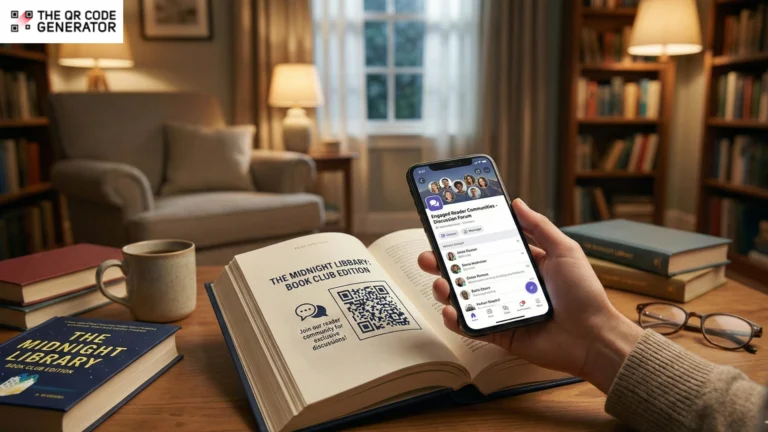
As reading habits evolve, so must the way publishers and organizers engage book club audiences through print editions. QR Codes on book club editions help bridge this gap by linking physical books to digital touchpoints that extend the reading experience beyond the page.
In this guide, we explore how QR Codes on book club editions help publishers tap into the growing book club movement, adapt to modern reading behaviors, and build richer, more connected reader communities across both print and digital spaces.
Table of contents
- Why traditional book clubs struggle with reader engagement
- How QR Codes turn book club editions into living reader communities
- How to create and embed QR Codes in book club editions
- What makes QR Codes work for book club editions
- Examples of QR Codes on book club editions
- Use TQRCG to create book club edition QR Codes for free
- Frequently asked questions
Why traditional book clubs struggle with reader engagement
Traditional book clubs have limitations that stop them from reaching all readers. Understanding these problems is the first step to finding solutions that actually work.
1. Limited reach in an online-first reading world
Traditional book clubs often require readers to meet in person at set times. It leaves out readers who prefer silent book clubs, people who live far away, and readers in other countries. Many readers discover books through TikTok, newsletters, and online reviews, and then purchase them independently. However, if a book doesn’t provide a way for readers to connect with a community, they tend to stay out of the conversation, even if they want to join.
2. Weak discoverability and community activation
Books that only exist in print form don’t give readers a clear way to discover a dedicated discussion group or community around them. This means that joining a book club becomes optional, rather than easy and automatic. People have to find out about communities through ads or emails instead of discovering them right in the book itself. This makes it harder for book clubs to grow and find new members naturally.
3. No visibility into reader engagement
Once a book sells, publishers don’t really know what happens next. They can’t see if readers join discussions, answer questions, or try to engage more deeply with the content. Without this feedback, it’s difficult to improve future editions or understand what readers truly appreciate.
4. Engagement fades after the final chapter
After people finish reading, they usually stop engaging with the book, unless they are a part of a community. New readers who join late struggle to fit in, and existing readers lose interest without new questions, events, or things to share. Modern book clubs, especially online ones, need ongoing ways to stay connected.
These problems are real, but they can be fixed. QR Codes offer an easy and scalable solution that changes how you connect with readers and build lasting communities.
How QR Codes turn book club editions into living reader communities
QR Codes can help connect communities with a single scan. Here are some benefits of adding a QR Code to book club editions.
1. Instant access to curated bonus content
QR Codes let book publishers deliver extra value right when readers want it. Readers can unlock bonus chapters, author interviews, behind-the-scenes stories, alternate endings, or reading guides that help them understand the book better and start discussions. For non-fiction and educational books, QR Codes can lead to glossaries, PDFs, case studies, or extra reading lists that help readers learn more beyond the printed page.
2. Built-in pathways to discussion and participation
Instead of making readers search for a community, QR Codes give them a direct path to join. A scan can take them to private discussion groups, moderated communities, social media groups, event sign-ups, or monthly reading questions. This allows flexible participation, while keeping the shared reading experience alive.
3. Seamless print-to-digital continuity
Dynamic QR Codes enable publishers to update linked content at any time without reprinting books. New discussion questions, rotating bonus content, upcoming events, or author Q&As can be added as the community grows. This flexibility keeps book club editions fresh long after they’re published, helping both early readers and those who discover the book later.
4. Understand how book-club readers engage
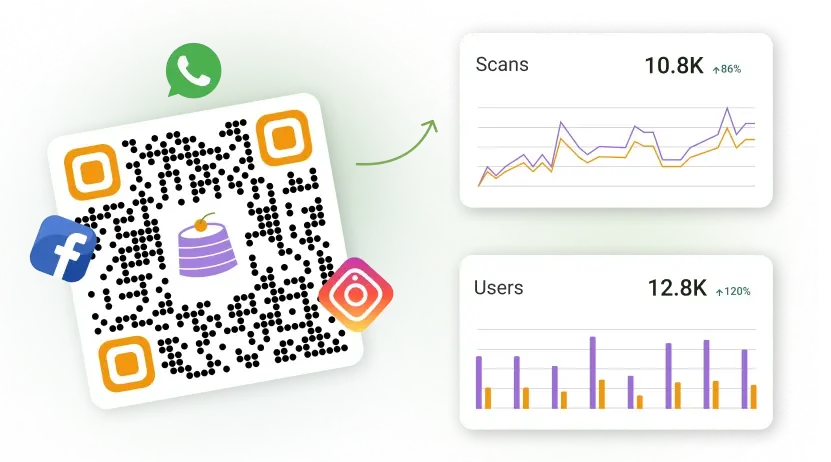
QR Code scans reveal how readers behave, such as how often they access content or when most people engage. Combined with community sign-ups or downloads, this information helps publishers understand what motivates readers to participate and develop better community features.
5. Strong long-term community building
When book-club editions offer interactive and social experiences, readers stay connected, recommend the book, attend events, and follow the author’s future work. QR Codes can also support reader reward programs, early-access groups, or preview groups for upcoming books.
The positive effect of keeping readers engaged is powerful. To capitalize on this, let’s understand how you can create and use QR Codes for book club editions.
How to create and embed QR Codes in book club editions
Creating an effective QR Code strategy requires thoughtful planning. Each decision you make impacts both the reader experience and your ability to measure and optimize over time.
1. Define the reader experience behind the QR Code
First, decide what value you want to give readers. This could take many forms, such as bonus chapters, community access, or exclusive author content.
You might also include reading guides, discussion questions, multimedia extras, events, or a newsletter signup. Your choice should match the book’s genre and audience. Fiction books might link to author stories or alternate endings. Nonfiction and textbooks may offer additional resources or study guides.
2. Create effective QR Codes for book club editions
You can create a QR Code for the book club edition in 4 easy steps.
Step 1: Choose the QR Code type based on the book club experience
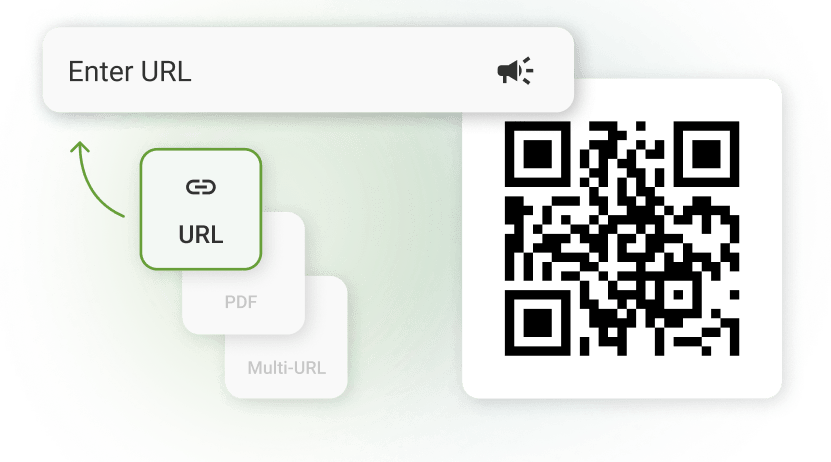
Start by deciding what you want readers to do after scanning the QR Code. The purpose will determine the QR Code type you use. For book club editions, it’s strongly recommended to use dynamic QR Codes. These allow you to update content over time without needing to reprint the book.
Dynamic QR Codes also provide scan analytics, helping publishers and organizers understand how readers engage with the book-club experience.
Step 2: Generate your QR Code
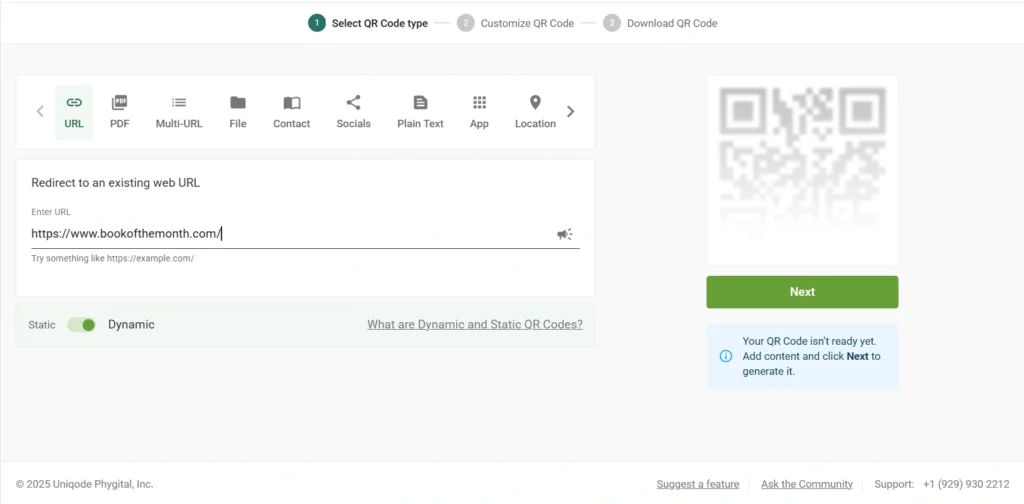
To create your book club QR Code, sign in to The QR Code Generator (TQRCG) and select the appropriate QR Code type. Enter the destination link (community page, video, discussion guide, or signup form) or upload the relevant file. Review the details and click Next to generate the QR Code.
Step 3: Customize the QR Code to match the book and book club
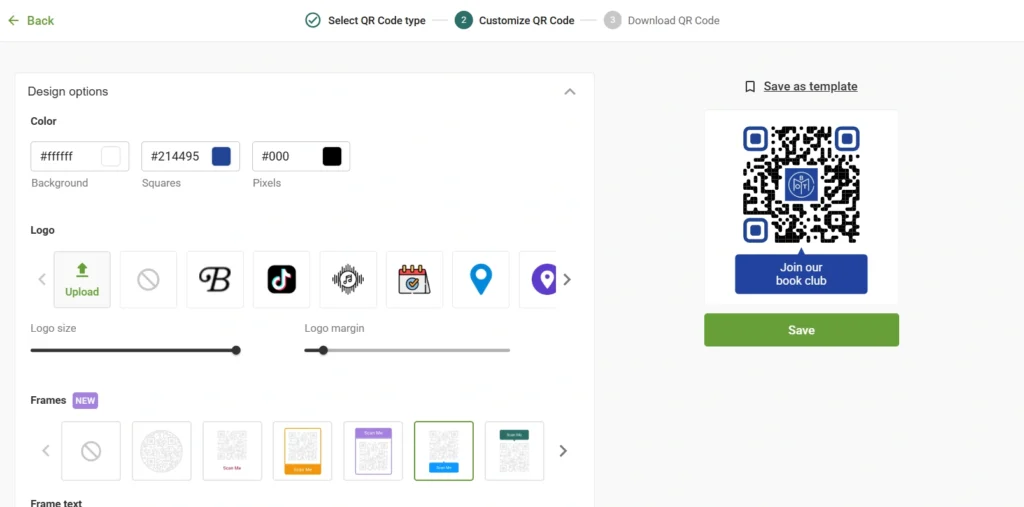
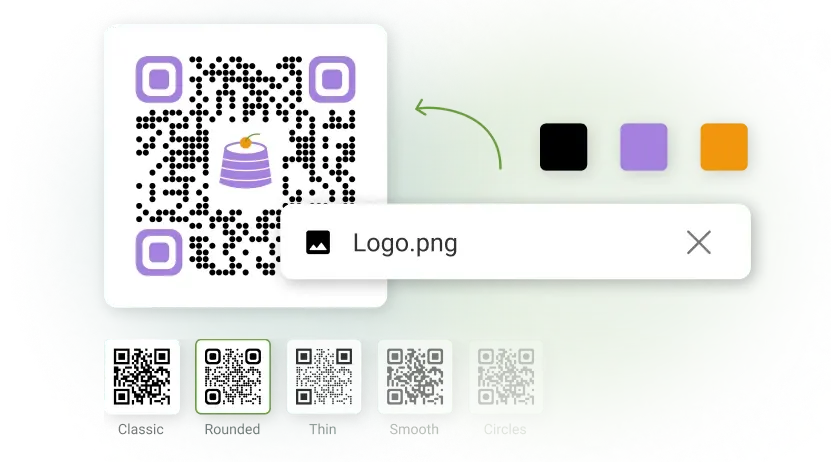
Next, customize the QR Code so it feels like a natural extension of the book. Apply the book’s color palette or the book club’s branding to make it familiar. Use a QR Code frame with a clear call to action (CTA), such as “Join the book club” or “Access the reading guide.” Once you’re satisfied with the design, click Save.
Step 4: Download, test, and place the QR Code thoughtfully
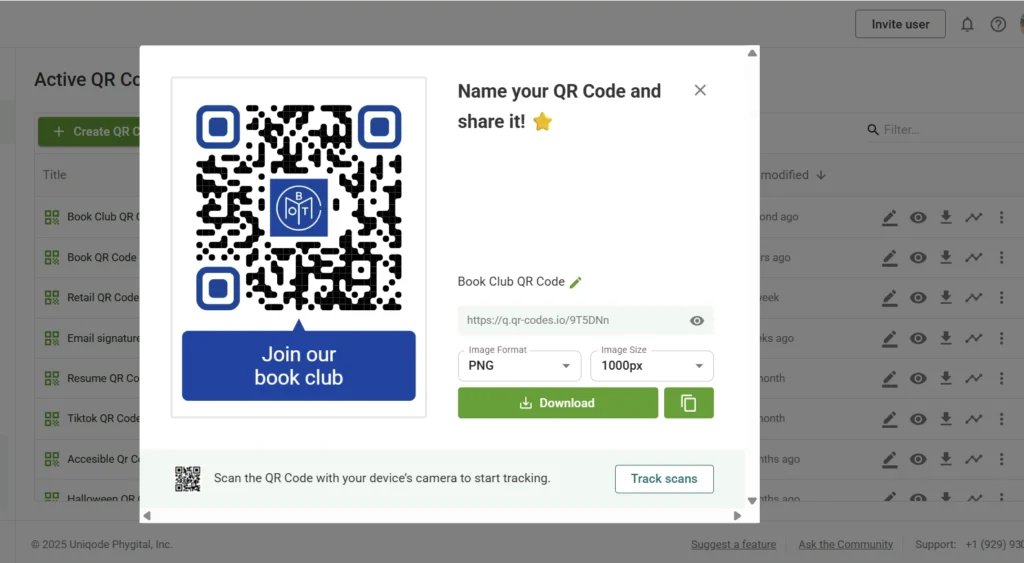
Name your QR Code and download it in the appropriate QR Code format. Opt for SVG for print layouts and high-resolution printing, and use PNG for digital use or smaller print elements, such as bookmarks or inserts. Before finalizing the book layout or print run, test the QR Code across multiple mobile devices to ensure fast and reliable scanning.
3. Design mobile-first landing experiences
Ensure the page that opens after scanning displays correctly on phones and loads quickly. Consider carefully whether to ask readers for information before they can access content. Getting an email ID can be good, but asking for too much information might stop people from participating. A/B test different QR Codes and use your data to see what works best.
4. Set up feedback and learning loops
Use trackable QR Code tools to track how many times codes are scanned, when people scan them, and which device they use. Track which readers sign up for communities and download content. Use this information to make future editions better by learning which extras people liked most and when to re-engage readers.
Now that you know how to create and use QR Codes for book club editions, you need to follow some best practices to get the most out of them.
What makes QR Codes work for book club editions
The difference between an effective and an unsuccessful QR Code strategy usually comes down to a few key principles.
1. Deliver genuine value
QR Codes must lead somewhere worth visiting. Vague CTAs such as “More content here” rarely work. Content behind QR Codes should feel meaningful and connected to the book and not random marketing. Invest time in creating experiences that feel special and worth the scan.
2. Commit to long-term content care
Because books last a long time, ensure that the digital content remains up to date. Broken links or outdated content damage reader trust. Dynamic QR Codes help, but you need to commit to maintaining them. If you create community features, such as forums or discussion groups, actively manage them to maintain a friendly and engaging environment.
3. Design for readability
QR Codes shouldn’t compromise the book’s appearance. Use quiet placement and match colors with the book’s design, but make sure the QR Code is easy to scan. Include a backup option like a short website link for readers who prefer to type or don’t want to scan.
4. Be transparent with data collection
If you collect reader information through QR Code forms, such as newsletter sign-ups, community registrations, or reader profiles, be transparent about why you need it. Avoid tracking too much or asking for too much personal information upfront, as that can stop people from participating. Readers will happily share information when they understand why you need it and what they’ll get in return.
5. Segment experiences thoughtfully
Determine whether community and bonus content are accessible to all readers or only to select subscribers. For example, you might save content exclusively for book club members or buyers of special editions. This affects how readers experience it and how special it feels.
For books with multiple editions, consider using different QR Codes for each edition to track separate print runs. This helps with both measurement and controlling who sees what.
There are several ways you can use QR Codes for book club editions. Let’s take a look at a few of them.
Examples of QR Codes on book club editions
The practical applications of QR Codes in book publishing are as diverse as books themselves. They offer flexible solutions for different genres and community types.
1. Fiction book-club editions
Link author interviews with video QR Codes and share discussion guides that help readers understand the story better and have honest conversations. Add alternate endings or behind-the-scenes stories that add depth to the story. These extras satisfy readers who want more insight into how the author created the story while providing natural discussion topics.
2. Non-fiction and educational book clubs
Offer case studies and companion resources in the form of PDF QR Codes that extend learning beyond what’s printed. Curate extra reading lists or expert commentary that helps readers explore topics mentioned in the book more deeply.
3. Community-led book club editions
Link QR Codes to private discussion forums or monthly live meetings, creating scheduled times for community members to engage. Curate a list of country-specific book clubs to help readers find the community of their choosing.
4. Series and loyalty-driven editions
Offer previews of upcoming books and early-buy access to readers who have finished the current book, building excitement for future releases. Launch loyalty program QR Codes linked to reader clubs or reward programs that celebrate loyal readers and turn them into brand advocates.
Use TQRCG to create book club edition QR Codes for free
QR Codes on book club editions help connect physical books to digital experiences. You can create easy pathways for readers to participate, engage, and stay connected long after finishing the book.
The opportunity is clear. More people are joining book clubs, readers expect new technology, and publishers who embrace this change will build stronger engagement and loyalty.
The QR Code Generator (TQRCG) makes it easy to create, customize, and manage dynamic QR Codes designed specifically for publishers. From initial design to tracking results, TQRCG handles the technical details so you can focus on building stronger reader communities.
Create your first book club QR Code with TQRCG today!
Frequently asked questions
The best content to link via QR Codes in book club editions includes bonus chapters, author interviews, discussion guides, downloadable resources, community forums, and event sign-ups. This type of content adds value beyond the printed book and encourages participation, deeper discussion, and continued reading.
Publishers should use dynamic QR Codes for book club editions. Dynamic QR Codes enable content to be updated at any time, such as adding new bonus material or upcoming events, without requiring a reprint of the book. Static QR Codes are better suited for permanent links, like an author’s homepage.
QR Codes should be placed where they are visible but non-disruptive, such as inside the dust jacket, on the back cover, at the end of the book, on a bookmark insert, or near a mention of bonus content. Including a clear call-to-action helps readers understand the purpose of the QR Code.
Publishers can track engagement by using QR Code analytics dashboards, which show scan frequency, timing, device type, and location. Combining this data with community sign-ups, purchases, or repeat participation helps measure conversions, engagement rates, and long-term reader value.
Yes, QR Codes should complement, not replace, the reading experience. Publishers can include fallback options such as short URLs or website links for readers who prefer not to scan.
